ContainerCompass earns a commission on qualifying Amazon purchases at no extra cost to you.
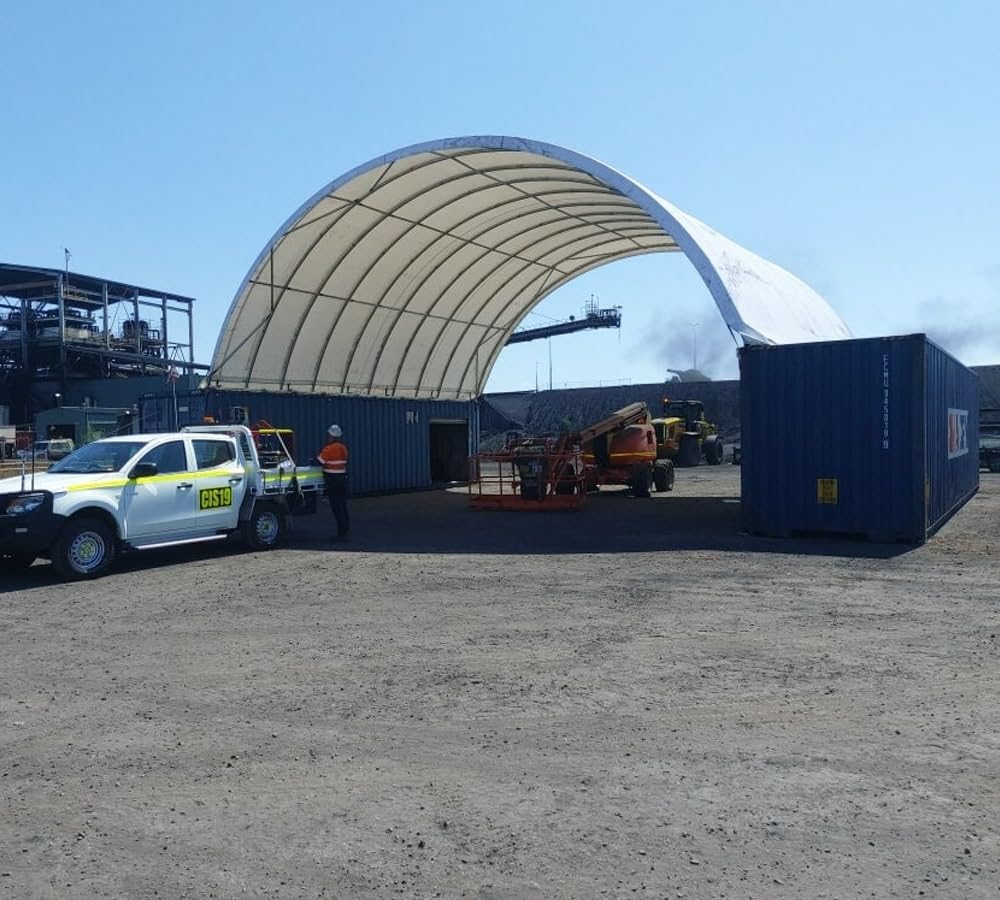
Two 20ft containers sitting parallel in a yard create a natural gap — typically 20 feet wide and 20 feet long if both containers are end-to-end. That gap is exposed to weather, unusable for serious work, and left empty on most properties. A container canopy shelter solves this cleanly: a galvanized steel arch frame spans from the top of one container to the other, a weather-resistant fabric cover goes over it, and you have 800 square feet of covered space in a day's work with no foundation, no concrete, and no permit in most jurisdictions.
Container canopy — at a glance
Standard coverage (20'×40')
800 sq ft
Price range
$800–$4,000+
vs permanent structure
70–90% less
Assembly time
1–2 days (2 people)
Foundation required
None — mounts to containers
Permit required
Usually not — check local
In this guide
Why a Container Canopy Works So Well
The container canopy takes advantage of something every container owner already has: two steel structures with flat, load-rated top rails. Those rails are engineered to support the weight of other containers stacked on top — they can absolutely carry the load of a galvanized steel canopy frame. The frame connects to the top of each container, the arch spans the gap, and the whole system is structurally self-sufficient without any ground anchoring in mild conditions.
No foundation required
The canopy frame anchors to the containers' top rails — no concrete, no groundwork, no site preparation beyond positioning the containers correctly.
100% pole-free interior
The arch frame design means no center poles eating into your usable space. Every square foot of the 800 sq ft span is fully usable — drive vehicles through, park equipment, run a workbench the full length.
Full weather protection
PVC and PE covers are waterproof, UV-resistant, and rated for significant snow loads. PVC canopies are rated to handle 20–30+ psf depending on spec — adequate for most US climates.
Basic tools only
Assembly requires a measuring tape, wrench, step ladder, and two people. No specialist equipment, no welding, no crane. Most 20'×40' canopies assemble in a day.
Relocatable
Unlike a permanent structure, the canopy disassembles and moves with the containers. If the property changes or the containers relocate, the canopy comes too.
Roll-up end access
Most canopies include a roll-up door on one or both end walls — button up tight in rough weather, open fully for drive-through vehicle and equipment access.
Best Container Canopy Shelters on Amazon
Five options covering the main size, cover material, and feature combinations. The primary pick matches the canopy described in the article — the Chery Industrial 20'×40' 11oz PE, which spans two standard 20ft containers and delivers 800 sq ft of covered space.
Editor's pick · Best overall
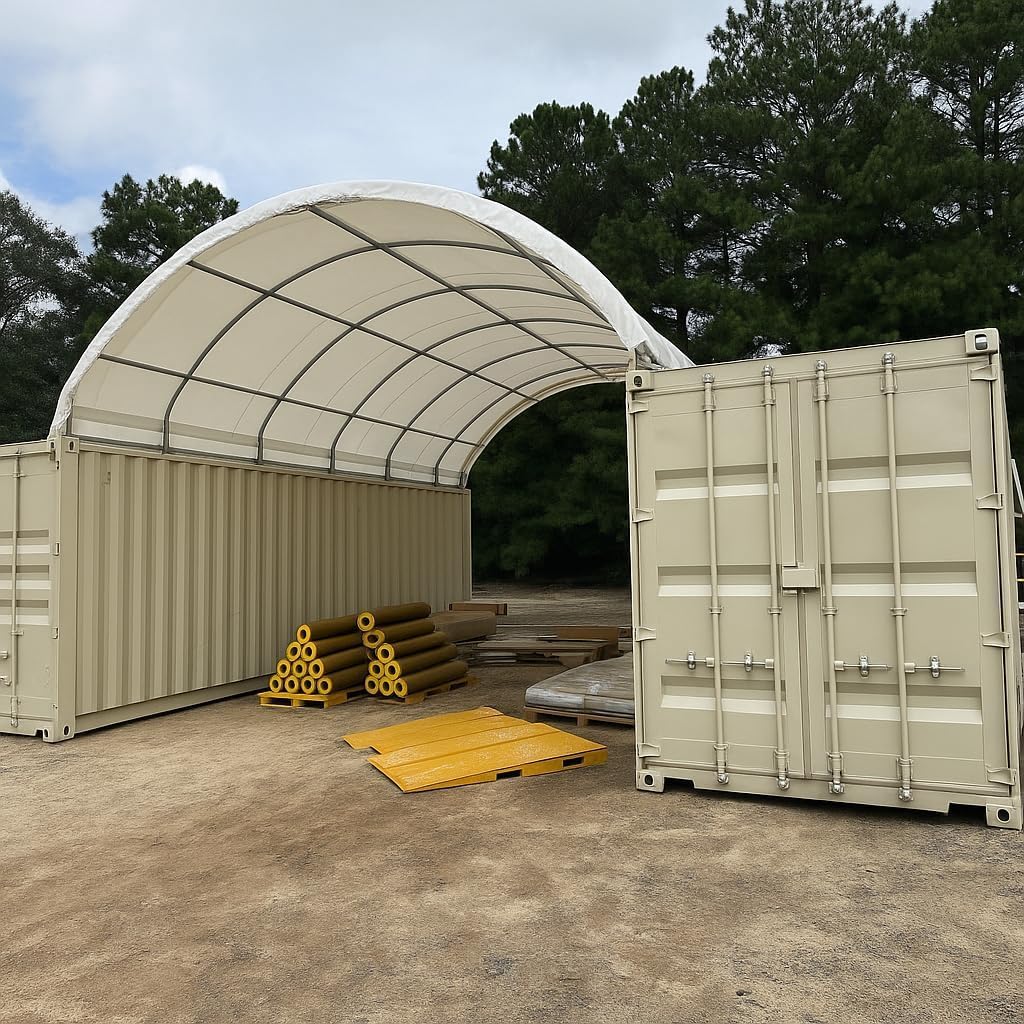
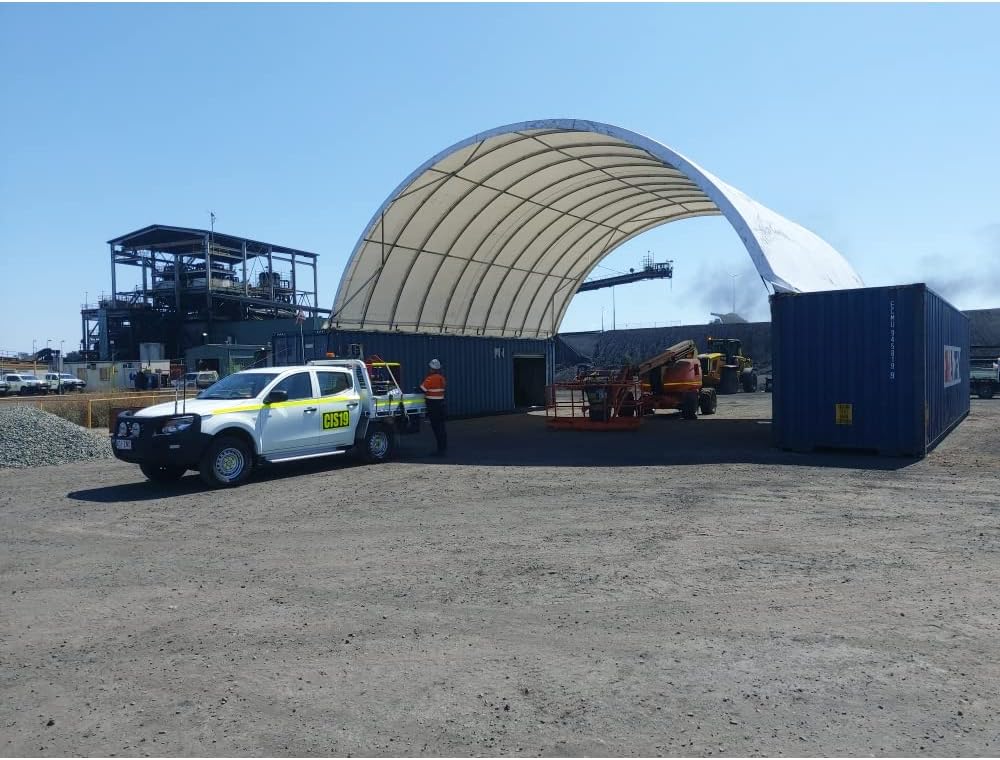
Chery Industrial Container Canopy Shelter — 20'×40' 11oz PE
The canopy featured in the article — 20ft wide by 40ft long, covering the gap between two standard 20ft containers. Galvanized steel arch frame; 11oz polyethylene cover that's UV-resistant and waterproof; 100% pole-free interior giving you all 800 sq ft to work with. Rollup door on the end for all-weather closure. One of the most popular container canopy options on Amazon.
⚠️ Unloading requires a forklift or adequate manual labor — lift gate service won't work due to product dimensions and weight. Plan before ordering.
View on Amazon →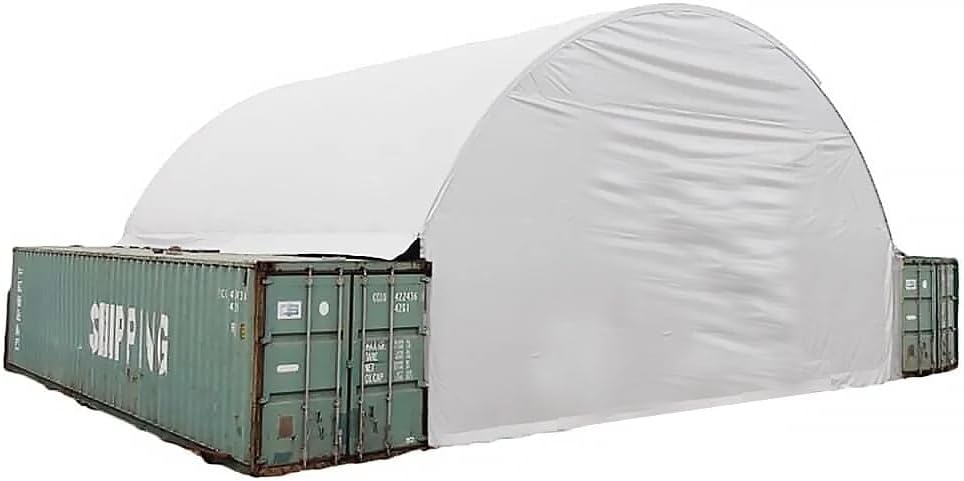
Heavy-duty cover · Best for snow country
Mytee Products Container Canopy Shelter — 40'×20' 21oz PVC with Back End Wall
Steps up to a heavier 21oz PVC cover — nearly double the weight of the 11oz PE entry-level options. The thicker PVC handles heavier snow loads and offers longer UV resistance. Includes a back end wall for full three-sided closure, leaving just the front open. Mytee Products ships from distribution centres in Ohio, Texas, California, and Georgia — faster delivery than overseas suppliers for most US buyers.
Certified frame · Best structural spec
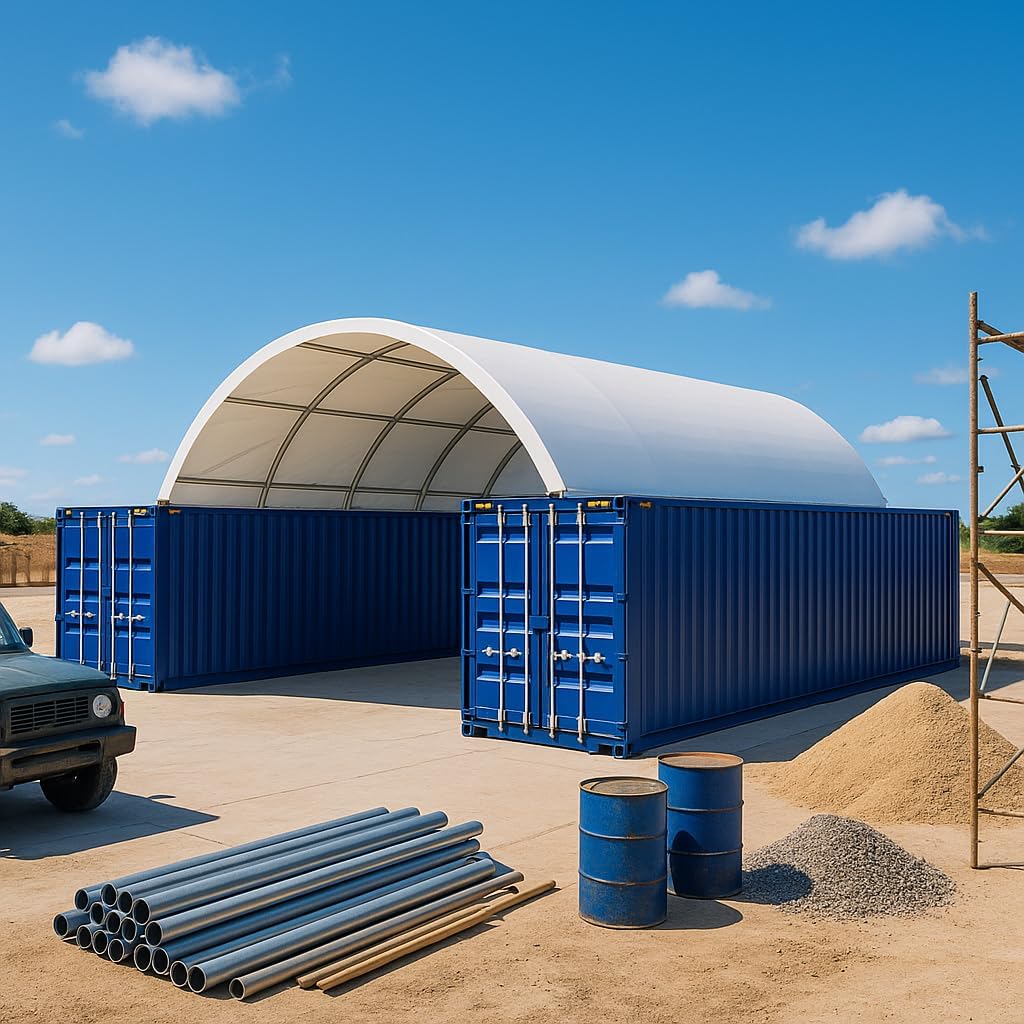
Heavy-Duty 20'×40' Container Canopy — 15GA Frame, CSA/TÜV Certified
The best structural specification in the category — 15-gauge hot-dip galvanized steel truss tubes (vs the more common 16-gauge), CSA/TÜV certified for snow loads up to 48 psf and winds up to 50 mph. SGS-certified cover material, PFAS-free, with UV-resistant, waterproof, flame-retardant, and self-cleaning properties. For buyers in heavy snow or high-wind regions who want engineering documentation on their shelter.
Full kit · Frame + cover included
Mytee Products Container Shelter Kit — 20'×40' with Frame
Full kit including both the frame and cover, sold as a complete package. Useful for buyers who want a single-source purchase rather than sourcing frame and cover separately. 21oz PVC cover; galvanized steel frame. Mytee Products has been supplying the trucking and industrial market since 2004 — established supplier with US-based support.
Largest span · 40'×40' double truss
Mytee Products Container Canopy — 40'×40' (1,600 sq ft)
Doubles the coverage to 40'×40' — 1,600 sq ft of covered space. The double-truss design handles the wider span. For larger operations with more containers or a wider gap configuration. At 1,600 sq ft this is a serious covered work area — comparable to a small commercial garage or equipment shed.
PE vs PVC — Cover Material Explained
The cover fabric is the most important spec decision after size. All canopy covers are waterproof — the difference is in durability, weight, and performance in extreme conditions.
| Cover material | Weight (oz) | Durability | Snow / wind rating | Best for |
|---|---|---|---|---|
| PE (polyethylene) — 11oz | 11oz (~373 g/m²) | Good — 3–5 year service life typical | Moderate — adequate for mild to moderate climates | Budget builds; mild climates; short-to-medium term use |
| PVC — 15oz | 15oz (~508 g/m²) | Very good — 5–8 year service life | Good — handles moderate snow and wind | Mixed climates; medium-term permanent installation |
| PVC — 18–22oz | 18–22oz (~610–745 g/m²) | Excellent — 8–15 year service life | Excellent — rated for heavy snow loads and high winds | Heavy snow regions; long-term permanent installation; commercial use |
The article's featured pick uses 11oz PE — a good starting point for most property owners in mild to moderate climates. If you're in the Mountain West, Upper Midwest, or Northeast where snow loads are significant, step up to a 21oz PVC cover minimum. The price difference between 11oz PE and 21oz PVC is typically $200–$600 — small relative to the cost of replacing a cover that fails under a heavy snow event.
What to Know Before You Buy
Container canopies ship on pallets and are too large for standard lift-gate delivery service. You need either a forklift on site, or adequate manual labor to unload when the truck arrives. Confirm your unloading plan before placing the order — this is the most common oversight buyers report.
| Factor | What to check |
|---|---|
| Container spacing | Measure the gap between your containers before ordering. Standard 20'×40' canopies are designed for ~20ft gaps — check the canopy's specified span and container rail height compatibility |
| Container rail height | Standard and High Cube containers have different top rail heights — confirm the canopy frame is compatible with your container type (most are adjustable) |
| Cover weight for your climate | 11oz PE for mild climates; 21oz+ PVC for snow-prone regions. Check your local design snow load (available from your county building department) |
| End walls | Some canopies include end walls; others are open on both ends. Decide whether you need closed ends for weather protection or open ends for drive-through access |
| Permit requirements | Most jurisdictions don't require a permit for a temporary canopy structure — but definitions of "temporary" vary. Check with your local building department before installation |
| Assembly help | Assembly requires two people minimum; some larger canopies benefit from three or four for the arch-raising step. Factor in labor before scheduling delivery |
Use Cases
| Use case | Why a container canopy works |
|---|---|
| Covered workshop / equipment bay | The 100% pole-free interior means you can park full-size farm equipment, a truck, or a tractor under the canopy — and work on it standing up. The containers provide secure enclosed storage on both sides; the canopy covers the working area between them |
| Job site staging area | Two container storage units on a job site with a canopy between them creates a covered staging area for materials and equipment. Keeps lumber, tools, and supplies dry without a permanent structure |
| Farm equipment shelter | Tractor, implements, hay equipment — the two-container-plus-canopy configuration is one of the most practical agricultural shelter designs available at this price point. Containers store parts and tools; canopy covers the machinery |
| Vehicle storage | RV, boat, trailer, or multiple vehicles — 800 sq ft at a comfortable clearance height handles most recreational vehicles that don't fit in a residential garage |
| Container home compound | For multi-container home builders, the canopy creates a covered outdoor living area, carport, or workshop between residential container modules — turning dead space into functional square footage |
| Livestock shelter | The enclosed design and weather-rated cover creates a functional livestock shelter for cattle, horses, or pigs in a covered paddock or corral configuration |
Building the two-container barn setup?
Our container barn case study covers the full two-container parallel build with a roof span — site prep, foundation, cost breakdown, and lessons learned. Read the container barn build guide →