You can't build a container home without plans — every jurisdiction requires architectural drawings before issuing a building permit. What varies is how detailed those drawings need to be, and whether a set of pre-made plans will satisfy your local building department or whether you need custom drawings stamped by a licensed engineer.
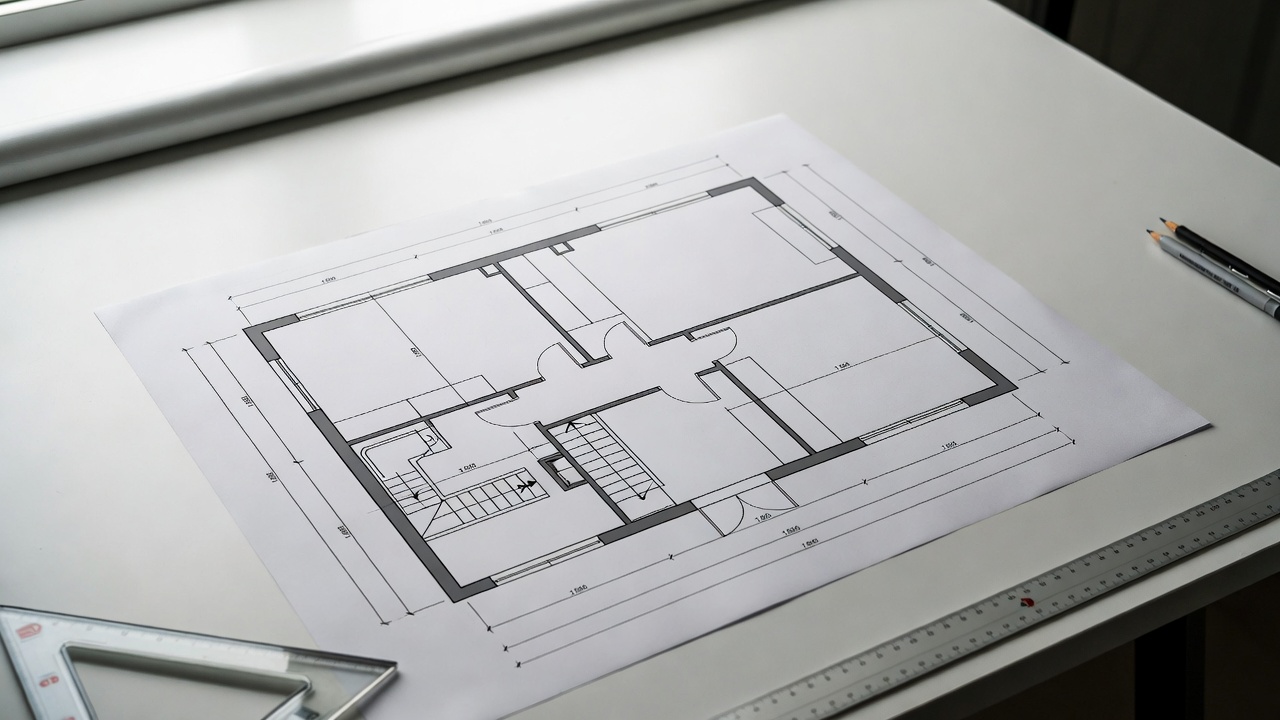
This guide explains what goes into a permit-ready plan set, your options for getting one, and the costs involved.
In this guide
Looking for layout ideas rather than permit documents? See our container home floor plans guide — studio, 1-bed, 2-bed, and 3-bed layouts with real dimensions.
What a permit-ready plan set includes
A complete plan set for a container home isn't just a floor plan sketch — it's a package of documents that tells the building department exactly how the structure will be built. Most jurisdictions require all of the following:
-
Site plan
A bird's-eye view of the property showing where the structure sits, setbacks from property lines, driveway access, and utility connections.
-
Floor plan(s)
Dimensioned drawings of each level showing room layout, door and window locations, and intended use of each space.
-
Elevations
Exterior views from all four sides showing the building height, window placement, roofline, and exterior materials.
-
Foundation plan
Drawings showing the foundation type, dimensions, and connection to the containers.
-
Structural drawings
Engineering drawings showing how the containers are connected, where openings are cut, and how the overall structure resists loads. Usually requires a stamped engineer's signature.
-
MEP plans
Mechanical, electrical, and plumbing layouts showing the routing of all systems through the structure.
-
Energy compliance documentation
Evidence that the insulation, windows, and HVAC system meet your jurisdiction's energy code (Title 24 in California, IECC in most other states).
Ask your building department first
Requirements vary significantly. Some rural counties accept a simple hand-drawn site plan and basic floor layout. Others require full engineering packages. Call your building department before commissioning plans — it saves you from paying for documentation you don't need, or from having your permit application rejected for missing something critical.
Your three options for getting plans
Pre-made plans
$500–$3,000
Buy ready-to-use drawings for a pre-designed container home. Modify the site plan to match your property.
- Fast — available immediately
- Much cheaper than custom
- May be pre-approved in some states
- May need local engineering stamp
- Design is fixed — limited customization
- Quality varies widely
Container-specialist architect
$5,000–$15,000
A licensed architect experienced with container builds creates custom plans for your site and design.
- Fully custom to your needs
- Permit-ready including engineering
- Knows local code requirements
- Can handle permit submission for you
- Higher upfront cost
- Takes 6–12 weeks to complete
General architect
$8,000–$20,000
A conventional residential architect who hasn't worked with containers before. They can do it, but expect a learning curve.
- Fully custom design
- Licensed and insured
- Usually costs more than a specialist
- Less familiar with container-specific details
- May add unnecessary complexity
Pre-made plans: what to look for
Pre-made container home plans range from beautifully engineered documents to PDFs that a marketing person put together with no construction experience. Before buying, verify:
- Stamped by a licensed engineer or architect. Plans not stamped by a licensed professional are usually decoration, not construction documents. Most building departments won't accept unstamped plans.
- Which state(s) they were designed for. Plans designed for California's seismic zones won't meet Florida's wind load requirements and vice versa. Ask the seller whether the plans have been approved in your state.
- What's actually included. Some "plan sets" are just floor plan sketches. A genuine permit-ready package includes all the documents listed above. Read the product description carefully.
- Modification policy. You'll need to customize the site plan for your property, and you may want minor layout changes. Check whether the seller provides editable files or only PDFs.
Working with a container-specialist architect
For most builds — especially first-time projects — working with an architect who specializes in container homes is worth the cost. They know which details cause problems with local inspectors, how to detail the container connections to pass structural review, and how to lay out MEP systems efficiently in the constrained space.
To find one, search "shipping container home architect [your state]" or ask your local building department if they've reviewed container home permits before — they often know which architects have submitted successful applications in the area.
What to ask in a first call:
- How many container homes have you designed that were successfully permitted and built?
- Have you worked in [your county] before?
- Does your fee include structural engineering, or is that a separate engagement?
- What does a typical timeline look like from first meeting to permit-ready drawings?
- Can you handle permit submission, or do I do that myself?
Structural engineering requirements
Shipping containers are structurally designed to carry enormous loads at their corner posts. The problems start when you cut holes in them. Every window and door opening in a container wall or floor removes structural material that was doing a job — and needs to be compensated for with additional steel.
A structural engineer needs to assess and document:
- Every opening cut into any container wall or floor
- How multiple containers are connected to each other
- Foundation attachment details
- For stacked designs: the connection between upper and lower containers, especially if offset
- Wind and seismic load resistance for your specific location
Engineering fees for a simple single-container home typically run $2,000–$4,000. Multi-container designs can reach $5,000–$8,000. This is on top of your architectural fees, unless your architect has an in-house engineer.
The permit process, step by step
The permit process for a container home follows the same general path as any residential build, but often takes longer because reviewers have more questions.
| Step | Who does it | Typical timeline |
|---|---|---|
| Pre-application meeting | You + building dept. | 1–2 weeks to schedule |
| Design & drawings | Architect / engineer | 6–12 weeks |
| Permit application submission | You or architect | 1 day |
| Plan review | Building department | 2–8 weeks |
| Corrections & resubmission | Architect / you | 1–4 weeks (if needed) |
| Permit issued | Building department | 1–5 business days after approval |
| Construction inspections | Building inspector | Throughout build |
| Certificate of occupancy | Building department | After final inspection |
Start permits before you buy a container
The permit process often surfaces zoning or code issues that affect your design. Starting the pre-application meeting early — before you've committed to a specific design or purchased a container — gives you the flexibility to adjust without losing money.