Container homes can cost anywhere from $25,000 for a simple single-container cabin to well over $350,000 for a multi-container family home. The gap is huge because the final price depends on a long list of variables — the number and size of containers, the level of finish, your location, and whether you DIY any of the work.
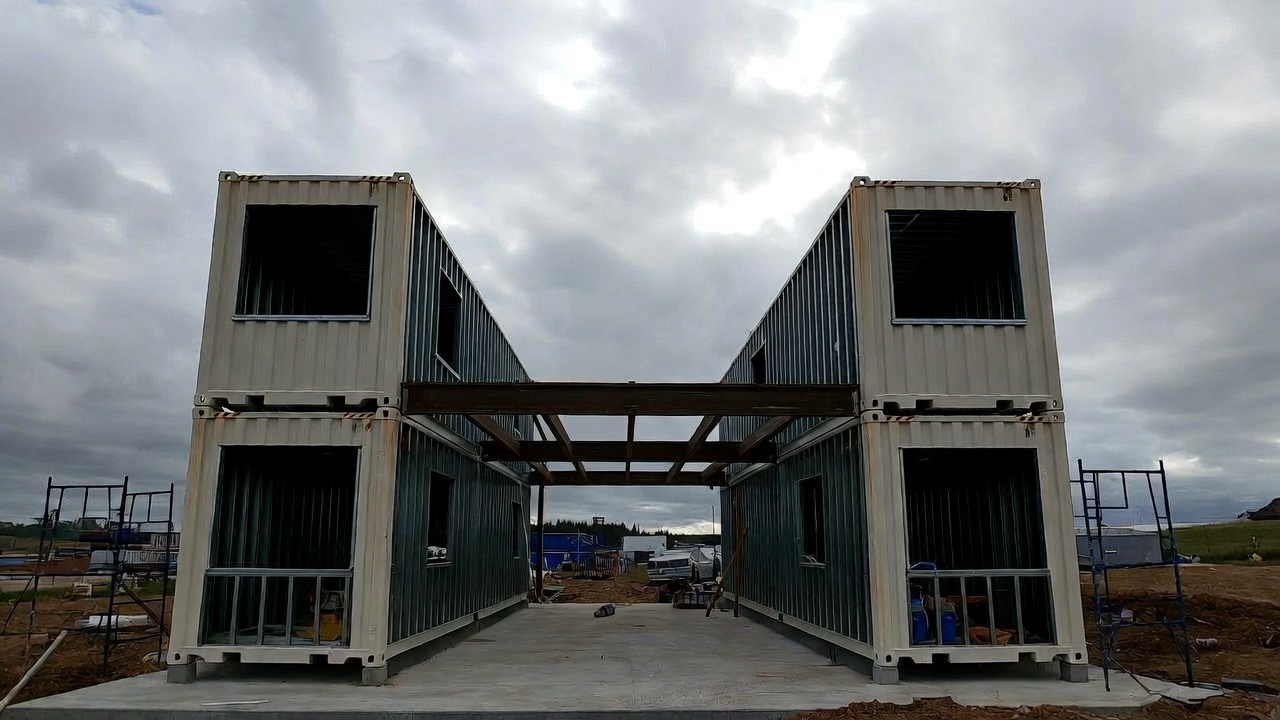
This guide breaks down every major cost so you can build a realistic budget before you commit.
Simple cabin build
$25K–$60K
1x 20ft container, basic finish, DIY-friendly
Most common build
$80K–$175K
2x 40ft containers, 2–3 bed, professional build
Luxury multi-container
$200K–$350K+
4–6 containers, high-end finishes, architect-designed
In this guide
The base container cost
The shipping container itself is usually the smallest line item in the overall budget. What you pay depends on size, condition, and where you're buying.
| Container size | Condition | Typical price | Best for |
|---|---|---|---|
| 20ft standard | Used (CWO) | $1,500–$3,000 | Cabins, studios, add-ons |
| 20ft standard | New (one-trip) | $3,500–$5,000 | Primary living spaces |
| 40ft standard | Used (CWO) | $2,500–$4,500 | Open-plan living areas |
| 40ft standard | New (one-trip) | $5,000–$8,000 | Main home structures |
| 40ft high cube | New (one-trip) | $5,500–$9,000 | Living spaces needing ceiling height |
New vs used: which should you choose for a home?
For a container home, most builders recommend one-trip (essentially new) containers. Used containers may have carried chemicals or pesticides, and the cost savings rarely justify the inspection and remediation work. See our new vs used guide for the full breakdown.
Full cost breakdown by category
The container is just the starting point. Here's where the real money goes — these figures are for a typical single-container home build in the continental US.
Foundation: the cost most people underestimate
Your foundation type has a bigger impact on cost than most people expect. A concrete perimeter foundation for a two-container home can easily run $12,000–$18,000 before you've done anything else. Pier foundations are cheaper ($4,000–$8,000) and work well in many climates, but may not satisfy code in all areas. Always get a soil test before assuming which foundation type your land needs.
Insulation: don't cut corners here
Steel conducts heat and cold aggressively. Proper insulation isn't optional — it's the difference between a livable home and a tin can that's 100°F in summer. Closed-cell spray foam is the gold standard for containers (it also prevents condensation, which is a serious issue with steel walls), but it runs $1.50–$3.00 per square foot. Budget $5,000–$10,000 for a 40ft container.
Don't skip the insulation budget
Condensation inside an under-insulated container home leads to mold within months. Closed-cell spray foam is the recommended solution — it seals the steel and insulates simultaneously. See our full container insulation guide for options and costs.
Total cost by home size
Here's what all-in costs look like across common container home configurations, from a basic weekend cabin to a full family home.
| Home type | Configuration | Sq footage | Budget build | Mid-range | High-end |
|---|---|---|---|---|---|
| Tiny cabin / studio | 1x 20ft | ~160 sq ft | $25,000 | $45,000 | $65,000 |
| 1-bed home | 1x 40ft | ~320 sq ft | $40,000 | $70,000 | $100,000 |
| 2-bed home | 2x 40ft | ~640 sq ft | $80,000 | $130,000 | $175,000 |
| 3-bed family home | 3–4x 40ft | ~960–1,280 sq ft | $130,000 | $200,000 | $280,000 |
| Large / luxury home | 6+ containers | 1,500+ sq ft | $220,000 | $300,000 | $400,000+ |
Per square foot, container homes aren't always cheaper
At the budget end, a basic container cabin can cost as little as $150/sq ft — significantly less than average new construction ($200–$400/sq ft in most US markets). But a high-end container home with premium finishes can easily exceed $300/sq ft, at which point traditional construction may cost the same or less. The savings come at the budget and mid-range levels.
Or buy one finished — how the numbers actually compare
Everything above assumes you're building. There's another route, and it's worth pricing properly rather than dismissing — but the comparison is easy to get wrong, because the two figures being compared aren't the same kind of number.
⚠️ A manufacturer's price is the unit. The figures above are all-in.
When a manufacturer quotes $65,000 for a finished one-bedroom, that's the module delivered. Land, foundation, utility connection, septic, permits, delivery and crane placement are all still yours — commonly another $30,000–$60,000, and considerably more on a rural site with no existing services. The build costs in the table above already include those. Compare like with like or the finished unit looks far cheaper than it is.
| One-bedroom, ~320 sq ft | Cost | What it covers |
|---|---|---|
| Budget self-build | $40,000 | All-in, with most labour done yourself |
| Mid-range self-build | $70,000 | All-in, contractor-managed |
| Finished unit from a manufacturer | $60,000–$65,000 | Unit only |
| Same unit, realistic all-in | $90,000–$125,000 | Adding land prep, foundation, utilities, permits, delivery |
So buying finished generally costs more than a mid-range self-build once the site work is counted. What you're paying the premium for is the removal of contractor risk — which, across the projects we've looked at, is where owner-managed container builds most often go wrong. A build that runs $20,000 over and four months late erases the difference quickly.
Where each route makes sense
Build it if you have construction experience, time, or a contractor you already trust. It's genuinely cheaper and you get exactly what you want. Buy it finished if you have none of those, or if your site is remote enough that finding a competent local contractor is the binding constraint. Our container homes for sale guide covers what turnkey includes, how to vet a manufacturer, and the permitting question that catches most prefab buyers.
Hidden costs most people miss
Land
This one sounds obvious, but many people price out the container build and forget to factor in land cost. Raw land suitable for a container home varies from $5,000/acre in rural areas to $100,000+ per lot in suburban markets. If you don't already own land, it's often the biggest line item of all.
Utility connections
Running electricity, water, and sewer to a remote site can cost $10,000–$50,000 or more depending on how far your land sits from the nearest utility connection. For off-grid container homes, solar, well, and septic systems add $20,000–$60,000 to the budget — but eliminate ongoing utility bills.
Architect and engineering fees
Most jurisdictions require stamped structural drawings for a building permit. A container-experienced architect typically charges $5,000–$15,000 for a full set of plans. Engineers may add $2,000–$5,000 on top of that. Pre-made container home plans (available for $500–$3,000 online) can reduce this cost but may still need local engineering review.
Shipping and crane placement
Delivery within 100 miles of a container depot typically costs $800–$2,000 per container. A crane to stack or precisely place containers runs $500–$2,000 per day. For a two-container build, budget $3,000–$6,000 for delivery and placement combined.
Contingency buffer
Container home builds — like all construction — rarely come in exactly at budget. A 15–20% contingency on top of your estimated costs is the standard recommendation from experienced builders. On a $120,000 project, that's $18,000–$24,000 you need to have available.
Container home vs traditional construction
How does it stack up against a conventional build at the same size?
Container home
$130/sq ft
Budget mid-range build
Traditional stick-frame
$200/sq ft
US national average, 2025
The cost advantage is real at the budget and mid-range level, but it narrows fast as you add complexity. Multi-story container homes require significant structural engineering (cutting openings and stacking weakens the corner posts), which adds cost. A single-story container home on a flat site with a simple layout is where the savings are most consistent.
Container homes also tend to build faster. A pre-designed container home can be assembled on-site in weeks rather than months, which reduces labor costs and means you're paying less rent or mortgage during the build phase.
Ways to reduce your costs
1. Buy the container yourself
Some container home contractors will source the container for you and mark it up 20–40%. Buying direct from a container supplier and having it delivered to the site cuts this out. Use our buying guide to find suppliers and understand what to look for.
2. Stick to one container and one level
Every container you add roughly doubles the complexity (and cost) of structural connections, roofing, and MEP systems. A well-designed single 40ft container home can be a genuinely livable, comfortable space at a fraction of the cost of a multi-container build.
3. Use a pre-made floor plan
Architect-designed plans for container homes are available from $500 to $3,000. Many have already been built and permitted in multiple states, which reduces engineering review costs and approval timelines.
4. Do your own interior finishing
Interior finishing (flooring, painting, trim, cabinetry) is one of the most DIY-friendly phases of any build. Taking this on yourself can save $10,000–$30,000 on a typical project, with no impact on structural safety or permitting.
5. Choose a simpler foundation
In the right soil conditions and climate, a pier or grade beam foundation is significantly cheaper than a full concrete slab — and works perfectly well for a container home. Get a soil assessment first, but don't assume you need the most expensive option.
Getting an accurate quote
General ranges only get you so far. Your actual cost depends on your specific land, local labor rates, the design you choose, and which finishes you select. The most reliable way to build a real budget is to:
- Get the container price first — this anchors the project and is the easiest number to nail down. Compare quotes from at least two or three suppliers.
- Talk to a container-experienced contractor — a general contractor who hasn't built with containers before will often overbid because they're accounting for unknowns. Find someone who has done it.
- Get a soil test and site assessment — this determines your foundation type and any unexpected site prep costs before you commit to anything.
- Pull a permit early — contact your local building department before finalizing your design. Requirements vary significantly and can affect what you're allowed to build.
Ready to get container prices?
Shipped.com is the largest container marketplace in the US — you can compare buy, rent, and rent-to-own options across hundreds of local depots. It's a good starting point for anchoring your budget.
Want the complete container home building guide?
Step-by-step guide covering design, permits, foundation, insulation, electrical, plumbing, and finishing — everything you need to plan and build your container home.