Shipping container prices in 2026 range from around $1,000 for an AS-IS unit to over $9,000 for a new 40ft high cube. The average price for a used 20ft container in good condition (CWO grade) is $2,000–$3,500, delivered within 100 miles of a depot. The right price for your situation depends on four things: size, condition grade, your location, and the current market. This guide covers all of them.
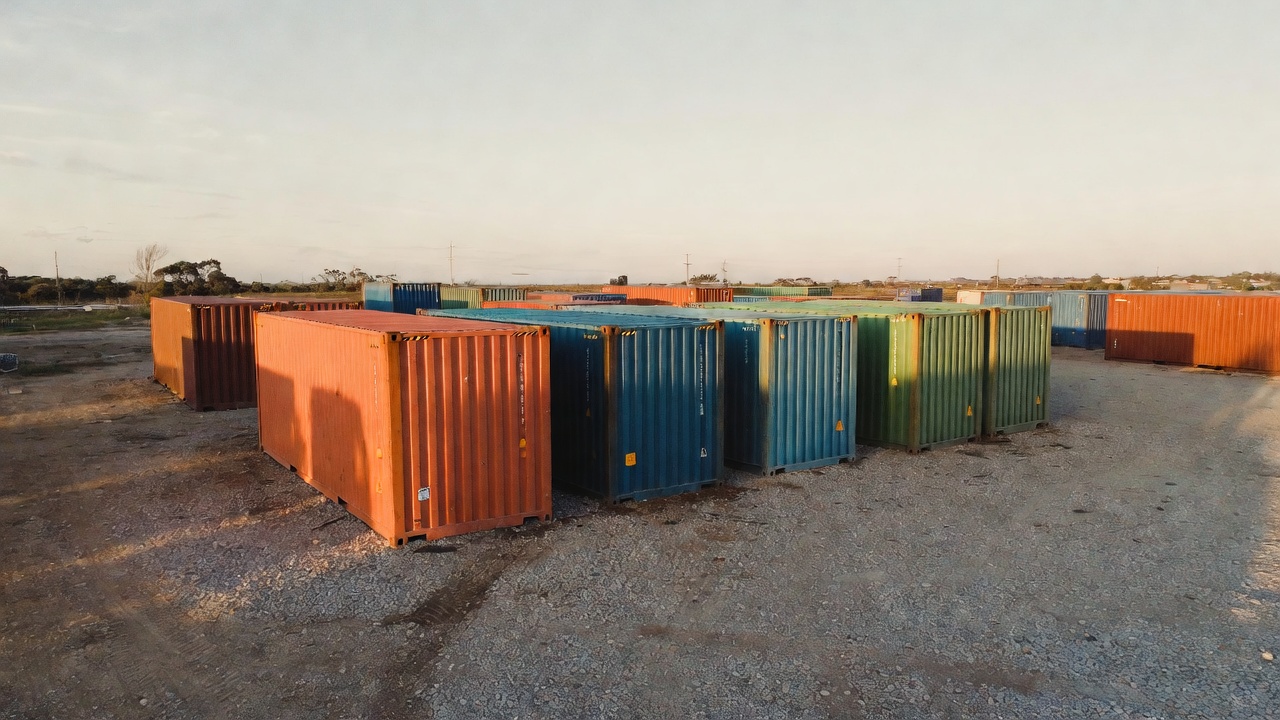
Shipping container prices at a glance
10ft
$1,500–$3,500
Used to one-trip
20ft
$1,200–$5,500
AS-IS to one-trip
40ft
$1,800–$9,000
AS-IS to HC one-trip
Delivery
$300–$2,000
Always extra
In this guide
- Full price table: all sizes and grades
- Prices by region
- Delivery costs
- Total cost by use case
- Hidden costs most buyers miss
- Buy vs rent: which is cheaper?
- What drives price differences
- How prices have changed
- How to get a fair price
- Are prices negotiable?
- Price calculator
- FAQ: every price question answered
Full price table: all sizes and condition grades
All prices exclude delivery. Prices reflect 2025–2026 US market conditions and will vary by region and supplier.
| Size | AS-IS | WWT | CWO | One-trip | High cube add |
|---|---|---|---|---|---|
| 10ft | $800–$1,400 | $1,000–$2,000 | $1,500–$2,800 | $2,500–$3,500 | +$200–$400 |
| 20ft standard | $1,000–$1,800 | $1,500–$2,500 | $2,000–$3,500 | $3,500–$5,500 | +$400–$800 |
| 40ft standard | $1,200–$2,200 | $2,000–$3,500 | $2,800–$4,500 | $4,500–$7,500 | +$500–$1,500 |
| 40ft high cube | $1,400–$2,600 | $2,400–$4,000 | $3,200–$5,200 | $5,500–$9,000 | — |
| 45ft | $1,800–$3,000 | $2,500–$4,200 | $3,500–$5,500 | $6,000–$10,000 | +$500–$1,000 |
What the condition grades mean
AS-IS: sold as found, no condition guarantee. WWT: wind and water tight — keeps weather out. CWO: cargo worthy, certified structurally sound and weathertight. One-trip: used once from factory to the US, functionally new. See the full grade guide.
Shipping container prices by region
Your location is the single biggest factor outside of size and grade. Containers are most plentiful and cheapest near major port cities — Los Angeles, Houston, Savannah, New York, Seattle. The further you are from a major depot, the more you pay for both the container and delivery.
Southeast (FL, GA, AL, SC)
| 20ft WWT used | $1,600–$2,600 |
| 20ft CWO used | $2,200–$3,200 |
| 40ft CWO used | $3,000–$4,500 |
| Delivery (50 mi) | $350–$600 |
Texas & Gulf Coast
| 20ft WWT used | $1,500–$2,400 |
| 20ft CWO used | $2,000–$3,000 |
| 40ft CWO used | $2,800–$4,200 |
| Delivery (50 mi) | $300–$550 |
West Coast (CA, OR, WA)
| 20ft WWT used | $1,400–$2,200 |
| 20ft CWO used | $1,900–$3,000 |
| 40ft CWO used | $2,600–$4,000 |
| Delivery (50 mi) | $300–$500 |
Midwest (OH, IL, MI, IN)
| 20ft WWT used | $1,800–$2,800 |
| 20ft CWO used | $2,400–$3,600 |
| 40ft CWO used | $3,200–$4,800 |
| Delivery (50 mi) | $400–$700 |
Northeast (NY, NJ, MA, CT)
| 20ft WWT used | $1,800–$2,800 |
| 20ft CWO used | $2,400–$3,800 |
| 40ft CWO used | $3,200–$5,000 |
| Delivery (50 mi) | $400–$800 |
Mountain West / Rural
| 20ft WWT used | $2,000–$3,200 |
| 20ft CWO used | $2,600–$4,000 |
| 40ft CWO used | $3,500–$5,500 |
| Delivery (50 mi) | $500–$1,200 |
Delivery costs — the number most buyers underestimate
Container prices are almost always quoted without delivery. Delivery is a separate line item and it is significant — in some rural areas it can match the container price on a smaller unit. Always ask for a delivered price to your zip code before comparing suppliers.
Near a major depot
$200–$500
Within 50 miles of a port city. Most competitive pricing for both container and transport.
Regional distance
$500–$1,200
50–250 miles from a depot. Delivery is a meaningful fraction of total cost — factor in before comparing quotes.
Inland or remote
$1,000–$2,500+
250+ miles from nearest depot. In remote areas delivery can equal or exceed the container price on small units.
Standard delivery uses a tilt-bed truck. If your site requires a crane, add $800–$2,500 on top. Mention any site access restrictions before scheduling delivery. For a full breakdown by distance, region, and site type, see our complete shipping container delivery cost guide.
Always get a delivered price, not just a container price
A supplier 30 miles away quoting $2,800 delivered may be cheaper total than one quoting $2,200 that is 200 miles from you with a $900 delivery fee.
Total cost by use case
The container purchase price is just the starting point. Here are realistic all-in budgets for the most common uses.
Basic storage
$2,500–$6,000
- Used 20ft container $1,800–$3,500
- Delivery $300–$800
- Gravel pad or blocks $200–$600
- Lock box & padlock $50–$150
Workshop / garage
$7,000–$20,000
- Used 40ft container $3,000–$5,000
- Delivery $400–$900
- Concrete pad $1,000–$3,000
- Electrical sub-panel $1,500–$4,000
- Ventilation & lighting $500–$1,500
- Insulation (optional) $2,000–$5,000
Backyard office
$15,000–$40,000
- One-trip 20ft HC container $4,500–$6,000
- Delivery $400–$800
- Foundation $1,000–$3,000
- Insulation $2,000–$5,000
- Electrical $2,000–$5,000
- HVAC mini-split $2,500–$5,000
- Interior finish $3,000–$8,000
Container home (single 40ft)
$35,000–$100,000+
- One-trip 40ft HC container $6,000–$9,000
- Foundation & site prep $5,000–$15,000
- Structural modifications $5,000–$15,000
- Insulation $3,000–$7,000
- Electrical, plumbing, HVAC $15,000–$35,000
- Interior finish & fixtures $10,000–$25,000
Hidden costs most buyers miss
Permit fees
$100–$1,500
Required in most jurisdictions for permanent placements or converted structures.
Foundation or site prep
$500–$5,000
Gravel pads, railroad ties, or concrete slabs. Often underestimated if excavation or grading is needed.
Crane delivery
$800–$2,500
Required when a tilt-bed truck cannot access your site. Discover this before ordering, not after.
Modifications
$500–$10,000+
Roll-up doors, windows, vents, personnel doors — each one adds cost. Cut openings require welding and structural reinforcement.
Painting
$300–$1,500
Used containers arrive in whatever color they retired in. Budget for repainting if appearance matters.
Inspection
$100–$400
Pre-purchase inspection if buying remotely, and any permits required for moving an oversized load.
Buy vs rent: which is cheaper?
Renting is cheaper for short-term needs (under 12 months). Buying wins on total cost for anything permanent or over 18 months.
| Duration | Buy (20ft CWO) all-in | Rent (20ft) all-in | Better option |
|---|---|---|---|
| 3 months | $3,500–$5,000 (buy + resell) | $450–$600 | Rent |
| 6 months | $3,000–$4,500 (buy + resell) | $900–$1,200 | Rent |
| 12 months | $2,500–$4,000 (buy + resell) | $1,800–$2,400 | Close call |
| 24 months | $2,200–$3,800 (own it) | $3,600–$4,800 | Buy |
| Permanent | $2,000–$3,500 (retains value) | Ongoing monthly | Buy |
Monthly rental rates for a standard 20ft container run $100–$200 in most US markets. See the full container rental pricing guide for current rates by size and region.
What drives price differences
- High impact
Distance from a depot
The largest variable. Being 200 miles from the nearest major depot can add $800–$1,500 to total cost versus a buyer near a port city.
- High impact
Condition grade
One-trip containers cost 2–3× more than WWT in the same size. The grade you need depends on your use — for basic storage, WWT is often sufficient.
- High impact
Global shipping demand
Container prices track global trade. When ocean freight demand surges (as in 2021), used prices spiked 50–80%. Current 2026 market is close to pre-pandemic norms.
- Medium impact
Local supplier competition
Port cities have many suppliers competing — prices are sharper. Inland markets with one or two suppliers have less pressure to compete on price.
- Medium impact
Container size
A 40ft costs 50–80% more than a 20ft in the same grade, but delivers twice the floor space — significantly better value per square foot.
- Low impact
Standard vs high cube
High cube adds $500–$1,500 to purchase price. Worth it for living spaces, offices, workshops. Not necessary for basic storage.
- No impact
Container color
Color is cosmetic and has zero effect on price. Don’t pay more for a specific color — any container can be painted.
How shipping container prices have changed
| Period | 20ft CWO used price | What was happening |
|---|---|---|
| 2017–2019 | $1,400–$2,200 | Normal pre-pandemic market, stable pricing |
| Early 2020 | $1,200–$1,900 | COVID slowdown briefly depressed prices |
| 2021–2022 | $3,000–$6,000 | Global supply chain disruption — extreme demand spike |
| 2023 | $2,000–$3,500 | Normalizing as supply chain pressures eased |
| 2024 | $1,800–$3,200 | Near-normal conditions |
| 2025–2026 | $1,800–$3,200 | Stable market, close to historical average |
Current pricing is back near historical norms after the 2021–2022 spike. If you’re seeing quotes well above these ranges, compare more suppliers. Well below, verify the condition grade carefully.
How to get a fair price on a shipping container
The most reliable approach: get three quotes for the exact same spec (same size, same grade, delivered to the same zip code). Prices should cluster within 10–20% of each other. An outlier 30%+ below the others signals a lower grade, undisclosed damage, or delivery not included.
Confirm these before accepting any quote:
- Is delivery included, and to what address exactly?
- What specific grade is the container — CWO, WWT, or just “used”?
- Is this a specific inspectable unit, or a generic depot container?
- Does the price include crane service if your site requires it?
- What is the policy if the container arrives with undisclosed damage?
- Are there fuel surcharges or access fees not in the base quote?
Are shipping container prices negotiable?
Yes — used containers from independent dealers are almost always negotiable. The container industry runs on relationships and cash flow, not fixed retail pricing. Most dealers quote with a margin of 10–20% built in, and they'd rather discount slightly than have inventory sitting at the depot.
How much you can negotiate depends on a few factors:
Most negotiable
- Used containers (WWT and CWO grade)
- Cash or same-day payment
- Buying 2+ containers at once
- End of month / end of quarter
- Containers that have been sitting in depot inventory 60+ days
- Flexible delivery date
Least negotiable
- One-trip (new) containers — tighter margins
- High-demand sizes in low-supply markets
- Large national suppliers (fixed pricing systems)
- Delivery fees — usually passed through at cost
- Peak demand periods (spring and early summer)
How to negotiate effectively:
- Get three quotes first. You can't negotiate without knowing the market rate. Call at least three suppliers for the same spec, delivered to your zip. This takes 20 minutes and is the single most valuable thing you can do.
- Lead with the competing quote, not a lowball. "I have a quote for $2,600 delivered from [competitor] — can you match or beat that?" works far better than "will you take $2,000?" Dealers respond to competition, not arbitrary offers.
- Ask what else they can throw in. If the price won't move, ask about free delivery, a longer warranty period, a better-condition unit for the same price, or waived fuel surcharges. Dealers often have flexibility on add-ons even when the base price is firm.
- Buy at the end of the month. Container dealers, like most businesses, have monthly targets. A call on the 28th of the month will get a more receptive ear than one on the 5th.
- Pay cash (or same-day ACH). Credit card payments cost dealers 2–3% in processing fees. Offering to pay by check, ACH, or cash gives you instant negotiating room for the same amount — and often more.
- Bundle with delivery flexibility. If you can accept delivery on the driver's schedule rather than a specific date, say so. Dealers can sometimes drop a container when a truck is already in your area, cutting their cost — and yours.
Typical discount range: 5–15% on used containers
Most successful negotiations on used CWO containers land 5–15% below the initial quote. On a $3,000 container, that's $150–$450 off. Multi-unit purchases (3+) can push to 15–20%. One-trip containers rarely discount more than 5% — margins are tighter and supply is more controlled.
Shipping container price calculator
Select your container size, nearest depot size, and delivery distance. The calculator uses verified Shipped.com pricing from July 2026.