"New vs used" is a slight oversimplification. Shipping containers are graded on a four-point scale that tells you much more than new or old — it tells you what condition you can expect to receive, what the container is certified for, and how it's likely to hold up over time. Understanding the grades before you get a quote will save you money and disappointment.
In this guide
The five container grades
What it means
IICL stands for the Institute of International Container Lessors, and IICL-5 certification is the strictest inspection standard in the leasing industry — typically applied to containers used in international leasing fleets rather than sold directly to consumers. An IICL-certified container meets standards more rigorous than basic Cargo Worthy certification, covering structural integrity, weatherproofing, and cosmetic condition all at once.
What you get: The most consistently high-condition used container grade available, often barely distinguishable from one-trip in practice. IICL containers are typically sourced from leasing fleets being rotated out rather than from general cargo service, which means more predictable cargo history.
Choose IICL for: buyers who want near-one-trip condition at a price point below true one-trip, when available in your area. Availability is more limited than CWO or WWT since these come from leasing fleets rather than general depot inventory.
What it means
The container was manufactured at a factory (almost always in China), loaded with cargo for a single ocean voyage to the US, and then sold rather than returned. It has been used exactly once and is functionally new. Minor scuffs and cosmetic marks from the factory and single transit are normal and expected.
What you get: Original paint in good condition, intact floor, no rust, fully functional doors and seals, no history of problematic cargo. The interior is clean and the smell is minimal — just the faint scent of the hardwood floor.
Choose one-trip for: container homes, food-related uses, any application where cleanliness and condition matter.
What it means
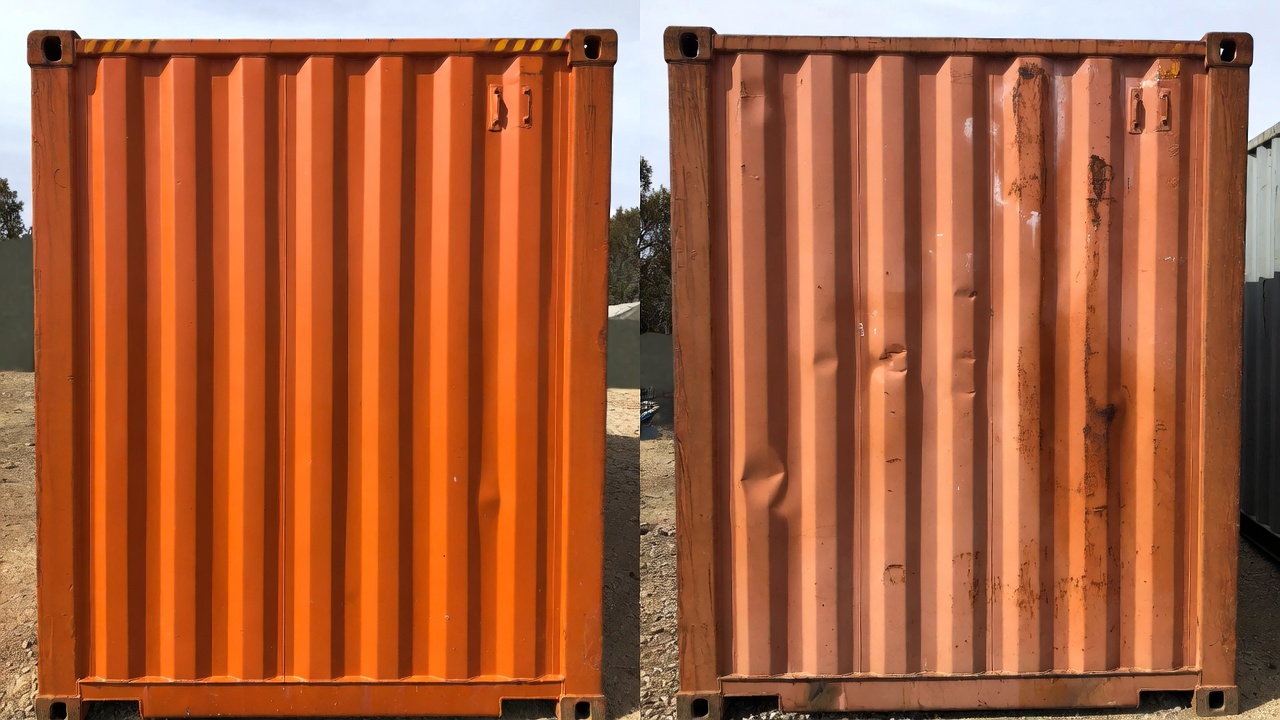
The container has been inspected and certified as structurally sound, weathertight, and suitable for international cargo shipping. It has been used multiple times and will show signs of use — repaints, dents, wear on the floor — but meets the structural and weatherproofing standards required by shipping lines.
What you get: A working container that can handle real cargo. May have been repainted (look for over-painted logos or patch spots). Dents are common, especially on the lower panels. Doors should work properly. The floor may have staining or worn areas but should be structurally intact.
Choose CWO for: storage, most general purposes, container home builds where you plan to re-clad the exterior anyway.
What it means
The container keeps weather out — no holes, no broken seals — but is not certified for active cargo shipping. It may have been retired from the shipping pool due to cosmetic damage, minor structural deformation, or simply age.
What you get: A weatherproof container at a lower price, with more visible wear than a CWO. Heavy denting, rust patches (inspect carefully for rust-through), and floor wear are common. The doors should still seal, but may not be as smooth to operate.
Choose WWT for: budget storage, situations where appearance doesn't matter, buyers who inspect in person before purchasing.
What it means
No warranty, no certification, no guarantee of condition. What you see is what you get — and you need to see it in person before you buy. AS-IS containers may have holes, significant rust-through, broken doors, or structural damage. Some are completely fine and just cosmetically rough; others are genuinely compromised.
What you get: The lowest price on the market and a wide range of possible conditions. Some AS-IS containers are better than some WWT containers; others are fit only for scrap. You cannot buy AS-IS sight-unseen without accepting real risk.
Choose AS-IS only if: you inspect the specific unit in person, you have experience assessing container condition, and the price is low enough to justify the uncertainty.
Price differences by grade (20ft and 40ft)
| Grade | 20ft price range | 40ft price range | Premium vs WWT |
|---|---|---|---|
| One-trip | $3,500–$5,500 | $5,000–$9,000 | +$1,500–$3,000 |
| CWO | $1,800–$3,200 | $2,500–$4,500 | +$500–$1,500 |
| WWT | $1,200–$2,200 | $1,800–$3,200 | Baseline |
| AS-IS | $700–$1,800 | $1,000–$2,500 | –$500–$1,000 |
All prices exclude delivery. Add $300–$2,000 depending on your distance from the nearest container depot.
Which grade for which use
Container home
You'll be living in it. The condition of the steel, floor, and any previous cargo matters significantly. One-trip for primary living; CWO acceptable if you inspect in person and the floor is in good condition.
Recommended: One-trip or CWO+General storage
Weather protection is the main requirement. CWO is the sweet spot — certified weathertight, lower price than one-trip, and has been through a professional inspection. WWT works for non-critical storage.
Recommended: CWOFood-related use
Restaurants, food storage, farm use. Unknown chemical history in used containers is a real concern. One-trip containers have the most documented and least problematic cargo history. Don't compromise here.
Recommended: One-trip onlyOffice or workspace
You're working in it but not living in it full-time. One-trip is ideal; CWO is fine if you inspect in person and are satisfied with the floor and interior condition.
Recommended: One-trip or CWOJob site storage
Tools and equipment, temporary use. Appearance doesn't matter; weatherproofing does. WWT is typically the right choice — saves money over CWO without sacrificing protection.
Recommended: WWTModification / conversion
You're cutting it up significantly — turning it into a bar, pool, or art installation. Structural integrity matters; cosmetic condition doesn't. CWO or WWT depending on budget.
Recommended: CWO or WWTChecking a container's history before you buy
Every shipping container manufactured for international service carries a BIC code — a unique identification number assigned by the Bureau International des Containers, the same system that lets ports, shipping lines, and customs authorities track individual containers worldwide. It's stamped on the container's doors and typically also appears on a metal plate inside.
You can run a container's BIC code through a public lookup registry before buying — functioning similarly to a CarFax report for a used car. While it won't show you every cargo it ever carried, it confirms the container's manufacturer, build year, and verifies the unit is a legitimately registered ISO container rather than an unverified or modified unit being sold as something it isn't. For a higher-value purchase — especially anything you're buying sight-unseen for delivery — checking the BIC code is a five-minute step worth taking.
What to look for in a used container
Whether you're buying CWO or WWT, inspect these specific things — either in person at the depot or at delivery before signing the receipt.
- Rust vs rust-through: surface rust is cosmetic and normal. Rust that has eaten through the steel creates holes — unacceptable in any weathertight container. Shine a flashlight inside with the doors closed: light from outside = holes.
- Floor condition: container floors are 1⅛" hardwood. Look for soft spots, cracked boards, and staining that could indicate chemical spills. Bounce on the center of the floor — it should feel completely solid.
- Door operation: open both doors fully. They should swing freely to 270°. Close them fully and check that the seal gaskets compress evenly all the way around. Operate both locking rods — they should engage and disengage smoothly.
- Roof dents: dents that form cups hold rainwater, which accelerates rust. Minor flat dents are fine; cupped dents need sealing or replacing.
- Forklift pockets: the steel sleeves on the underside that accept forklift tines. Check for deformation or damage.
- Corner castings: the eight oval fittings at each corner that carry the entire structural load. Cracked or deformed corner castings are a serious structural problem.
The chemical residue question
Shipping containers have carried everything from furniture and clothing to pesticides and industrial chemicals. Used containers can retain chemical residues in the floor, walls, and seals — and this can't always be detected by smell or visual inspection.
For food use, container homes (especially children's rooms), and any application involving frequent human presence, the safest approach is a one-trip container with documented cargo history. For general storage of non-food goods, the risk is lower and CWO or WWT containers are widely used without issues.
If you want to use a used container for a sensitive application, a certified industrial hygienist can test for chemical residues for $300–$800 — worth considering for container homes if you can't source one-trip containers in your area.
Compare grades and prices from local suppliers
Shipped.com lets you filter by grade, size, and location to find the right container at the right price — with delivery estimates to your zip code.
Going to inspect a container?
Download our free 34-point inspection checklist — catch structural damage, rust-through, and contaminated floors before you commit.