The best insulation for a shipping container depends on your budget, climate, and how the container will be used. For habitable spaces, closed-cell spray foam is the gold standard — it insulates and solves the condensation problem in one step. For storage or tight budgets, rigid foam board is the best DIY option. Here's everything you need to choose and install the right method.
At a glance: shipping container insulation
Best overall method
Closed-cell spray foam
Cheapest DIY option
Rigid foam board (exterior)
Cost range (20ft container)
$1,400 – $9,000
Biggest mistake to avoid
Batt insulation without vapor barrier

In this guide
- The condensation problem — why it comes first
- Active humidity control
- Three insulation methods compared
- DIY spray foam kits
- Exterior insulation — the overlooked approach
- Foam board materials
- Cheapest way to insulate a shipping container
- Shipping container insulation kits
- R-value requirements by climate
- Full cost breakdown
- Walls, floor, and roof — each surface covered
- Tools worth owning
- DIY vs professional installation
The condensation problem — why it comes first
Steel containers are nearly airtight, and steel has high thermal conductivity. When warm, humid interior air meets the cold steel walls, moisture condenses on the surface — the same way a cold glass sweats on a warm day. In a container, this happens inside the wall cavity where you can't see it.
Condensation on steel = rust. Condensation on the wood floor = rot. Condensation trapped in air gaps = mold. In a humid climate, a poorly insulated container with no vapor barrier can develop significant mold problems within a single summer season.
The solution is insulation that also functions as a vapor barrier — eliminating the air gap where condensation forms. This is why closed-cell spray foam is the standard for habitable containers: it bonds directly to the steel, fills every gap, and provides a complete air and moisture barrier in one application. Other methods can work, but they require more care to achieve the same result.
Batt insulation without a vapor barrier is the #1 insulation mistake
Fiberglass or mineral wool batt has air gaps between the steel and the insulation where condensation forms on the metal. If you use batt insulation, a continuous vapor barrier against the steel is non-negotiable — and any gap at outlets, seams, or penetrations is a failure point. Most container insulation failures come from skipping or botching the vapor barrier with batt.
Active humidity control — the second half of the answer
⚠️ Read this before the product recommendations
A dehumidifier is not a substitute for correct insulation and vapor control. If your assembly has an air gap against cold steel, moisture will condense there whether or not a machine is running in the room — you cannot dehumidify the inside of a wall cavity. Get the envelope right first. What active dehumidification does is manage the moisture your occupancy generates, which is a real and separate problem.
Insulation stops moisture condensing on the shell. It doesn't remove moisture from the air inside. In a container those are genuinely different problems, and the second one catches people out because the container is so airtight.
A conventional house leaks. Air changes carry humidity out through the building fabric more or less continuously. A well-sealed container doesn't do that, so everything that generates moisture inside — breathing, cooking, showering, drying clothes, a damp concrete slab curing, even stored firewood — accumulates. Interior relative humidity climbs, and once it climbs high enough it will find the coldest surface available and condense there.
| Container use | Moisture load | Approach |
|---|---|---|
| Unheated storage, no occupancy | Low — but seasonal swings still cause sweating | Passive vents may be enough. A small dehumidifier on a humidistat is cheap insurance for anything valuable stored inside. |
| Workshop or home gym | Moderate — intermittent occupancy, sometimes high output | Dehumidification recommended, especially if the space is unheated between uses. |
| Habitable dwelling | High — continuous occupancy, cooking, bathing | Mechanical ventilation plus dehumidification. This is a code and health issue, not just comfort. |
| Any container in a humid climate | High regardless of use | Gulf Coast, Southeast, Pacific Northwest — ambient humidity alone justifies a unit. |
What to look for in a unit for a container
Most consumer dehumidifiers are the wrong tool here, for one specific reason: they stop working when it gets cold. A typical room dehumidifier is rated down to around 65°F, and below that the coil frosts and the unit either shuts off or runs without removing water. An unheated container in autumn or winter sits well below that — which is exactly when condensation on cold steel is worst.
| Specification | Why it matters in a container |
|---|---|
| Low-temperature operation | The critical spec. You need a unit rated into the 30s°F, not one that quits at 65°F. |
| Auto defrost | Allows continuous operation in cold conditions without the coil icing up. |
| Gravity or pump drainage | Emptying a bucket isn't viable in an unattended container. You want a hose run to the outside. |
| Humidistat control | Set it and leave it. The unit cycles on demand rather than running constantly. |
| Memory / auto restart | After a power cut it resumes on its own — important for a structure you aren't in daily. |
| Metal casing | Container environments are harder on equipment than a spare bedroom. |
ContainerCompass earns a commission on qualifying purchases at no extra cost to you. We recommend crawlspace-rated equipment here because a sealed steel box behaves like a crawlspace, not like a living room.
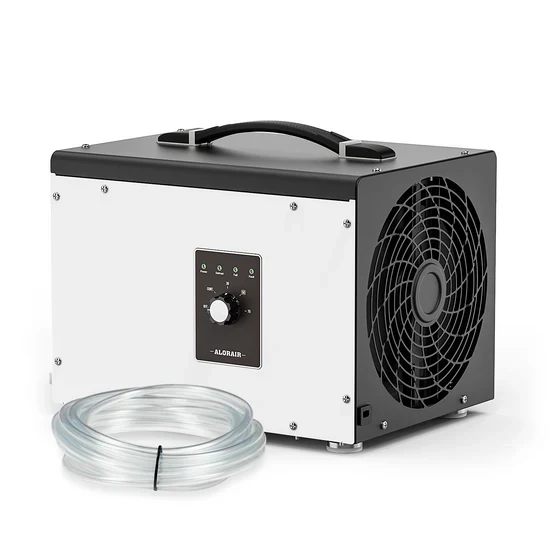
Best fit for most containers — 20ft and 40ft
AlorAir Sentinel HS35 — 35 pints/day (AHAM)
Rated for spaces up to 1,000 sq ft, which is generous for any single container — that headroom means it cycles rather than running flat out, which is what you want. The specs that matter here: it operates down to 33°F with automatic defrost, so it keeps working through the cold months when steel sweats worst. Gravity drainage through a 6.5 ft hose connection, so no bucket to empty. Automatic humidistat, memory restart after a power cut, and a metal casing. ENERGY STAR and cETL listed, 5-year warranty. At 15.4 × 11.2 × 11.4 in and 37.8 lbs it tucks into a corner or hangs from the ceiling with a kit.
Removes 70 pints/day at saturation · up to 1,000 sq ft · 33–105°F
View the Sentinel HS35 →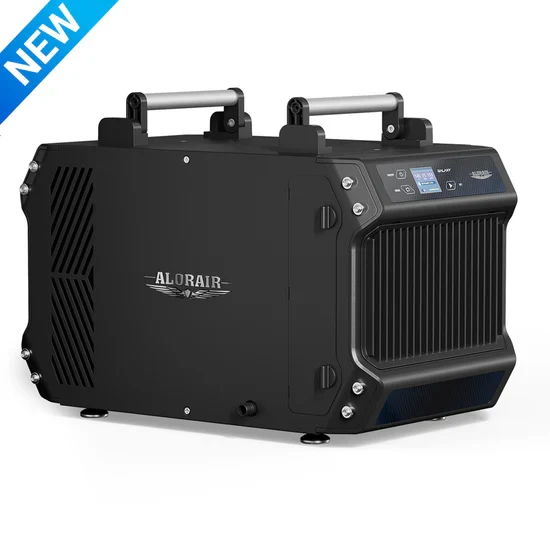
Multi-container builds and high moisture loads
AlorAir Galaxy 60 — 60 pints/day (AHAM)
The step up, rated to 1,800 sq ft. Worth it when you have more load than a single box: two or three containers joined into one dwelling, a full-time home with a kitchen and bathroom running, or any container in a Gulf Coast or Southeast climate where ambient humidity is working against you year round. Same core features as the HS35 — auto defrost, humidistat, memory starting, metal casing, R32 refrigerant — with roughly double the extraction and an LCD display for setting target RH or GPP directly. Draws 4.5A, so account for it in your electrical plan.
Removes 145 pints/day at saturation · up to 1,800 sq ft
View the Galaxy 60 →Hang it, don't stand it
Both units support hanging kits that suspend them from ceiling members. In a container that's worth doing for three reasons: you get the floor space back, vibration doesn't transmit into the structure, and the extra height gives you the fall you need for gravity drainage to actually work. Run the drain hose out through a wall penetration and seal it properly — an unsealed penetration undermines the vapor control you just paid for.
Three insulation methods compared
Closed-cell spray polyurethane foam (SPF)
Best for containersR-value per inch
R-6 to R-7
Highest of any common method
Cost installed (20ft)
$4,000–$9,000
Walls, ceiling, floor
Vapor barrier
Yes — built-in
No gaps possible
Closed-cell spray foam is sprayed directly onto the steel interior and expands to fill every corrugation and corner, bonding to the metal. It provides the highest R-value per inch of any common insulation, acts as a complete air and vapor barrier, and adds structural rigidity to the walls.
Why it's right for containers: The complete air seal eliminates the gap where condensation forms on steel. No separate vapor barrier is needed, and there's no way for moisture to penetrate between the insulation and the metal. Once properly installed, the condensation problem is solved permanently.
Downsides: Requires professional installation — the two-component system needs specialized equipment, proper PPE (off-gassing during application is toxic), and trained technique. Improperly applied foam is ineffective. Higher upfront cost than alternatives, reduces interior space, and is not removable if you need wall access later.
Rigid foam board (XPS, EPS, or polyiso)
R-value per inch
R-3.8 to R-6.5
Varies by product type
Cost installed (20ft)
$1,600–$5,000
Interior or exterior
Vapor barrier
Partial
Seams must be taped
Rigid foam boards can be installed on interior walls with adhesive or mechanical fasteners, or on the exterior of the container under cladding. Exterior installation is preferable — it keeps the thermal mass of the steel on the warm side, improves performance, and doesn't reduce interior space.
Product types: XPS (extruded polystyrene, e.g., Owens Corning Foamular) offers R-5/inch and good moisture resistance. EPS (expanded polystyrene, the white beaded foam) is cheaper at R-3.8–4/inch but absorbs more moisture. Polyiso (polyisocyanurate) gives R-6.5/inch and is the most efficient per inch but can degrade in very cold temperatures.
Downsides: All seams must be taped with foil tape to create a continuous vapor barrier — any gap is a condensation point. Interior installation requires a framing system to hold boards against corrugated walls. More labor-intensive than spray foam on complex shapes.
Batt insulation (fiberglass or mineral wool)
R-value per inch
R-3 to R-4.3
Lower than foam options
Cost installed (20ft)
$1,400–$3,500
Including framing and VB
Vapor barrier
Separate required
Critical — no shortcuts
Standard fiberglass or mineral wool batt is the most familiar and cheapest insulation type. It requires building a stud wall frame inside the container, installing a vapor barrier against the steel, filling with batt, then cladding over it.
When it works: In dry climates with minimal condensation risk, properly installed batt with a continuous vapor barrier can perform adequately. Mineral wool (e.g., Rockwool) is preferable to fiberglass — it's more moisture-resistant and doesn't lose R-value when wet.
Significant caveats: This is the riskiest method for containers. Any gap in the vapor barrier — at outlets, seams, or penetrations — creates a condensation path to the steel. The stud wall framing also loses 4–6 inches of interior width. Not recommended for humid climates or containers with significant temperature swings.
DIY spray foam kits — what to know before you buy
ContainerCompass earns a commission on qualifying Amazon purchases at no extra cost to you. We only recommend products we'd use ourselves, and we flag the categories where the options are genuinely mixed.
Two-component spray foam kits let you apply closed-cell foam yourself without hiring a contractor. They work — but this is a category where you should go in with realistic expectations, because the reviews across almost every brand tell the same story.
⚠️ The four things that go wrong with DIY foam kits
Coverage claims assume ideal conditions. A kit rated at 600 board feet typically delivers meaningfully less in practice, because real-world yield depends on temperature, application speed, and how much you waste learning the technique. Budget 20–30% more than the rating suggests.
Temperature matters more than people expect. Most kits want the tanks, the substrate, and the ambient air in a fairly narrow range — commonly around 70–85°F. Cold steel in a cold garage produces poor expansion and weak adhesion. This is the single most common cause of a failed DIY foam job.
You can't stop mid-job. Once the chemicals mix in the nozzle, pausing for more than about 30 seconds can cure the tip solid. Plan the whole application before you pull the trigger, and have spare tips.
It's genuinely hazardous. Uncured spray foam releases isocyanates. This is not a "crack a window" situation — full-face respiratory protection and forced ventilation are the correct precautions.
When a kit makes sense — and when it doesn't
| Situation | Verdict |
|---|---|
| Small areas, patching, sealing gaps and penetrations | ✓ A kit is the right tool. Professional minimum charges make small jobs uneconomic to contract out. |
| A single 20ft container, working in mild weather | ✓ Achievable for a careful DIYer. Expect to use 2–3 kits and take a full day. |
| A full 40ft container to full depth | ✗ Run the numbers first. At roughly $0.80–$1.00 per board foot for kits, several kits often approaches professional pricing — and a pro brings better equipment and consistent results. |
| Cold climate, working in winter | ✗ Wait for warmer weather or hire out. Temperature is the main failure mode. |
| Habitable space where the finish matters | ✗ Professional application gives more even thickness, which matters for both R-value and vapor control. |
If a kit does fit your situation, get quotes from a local spray foam contractor first anyway — it takes ten minutes and tells you whether the DIY route is actually saving you anything.
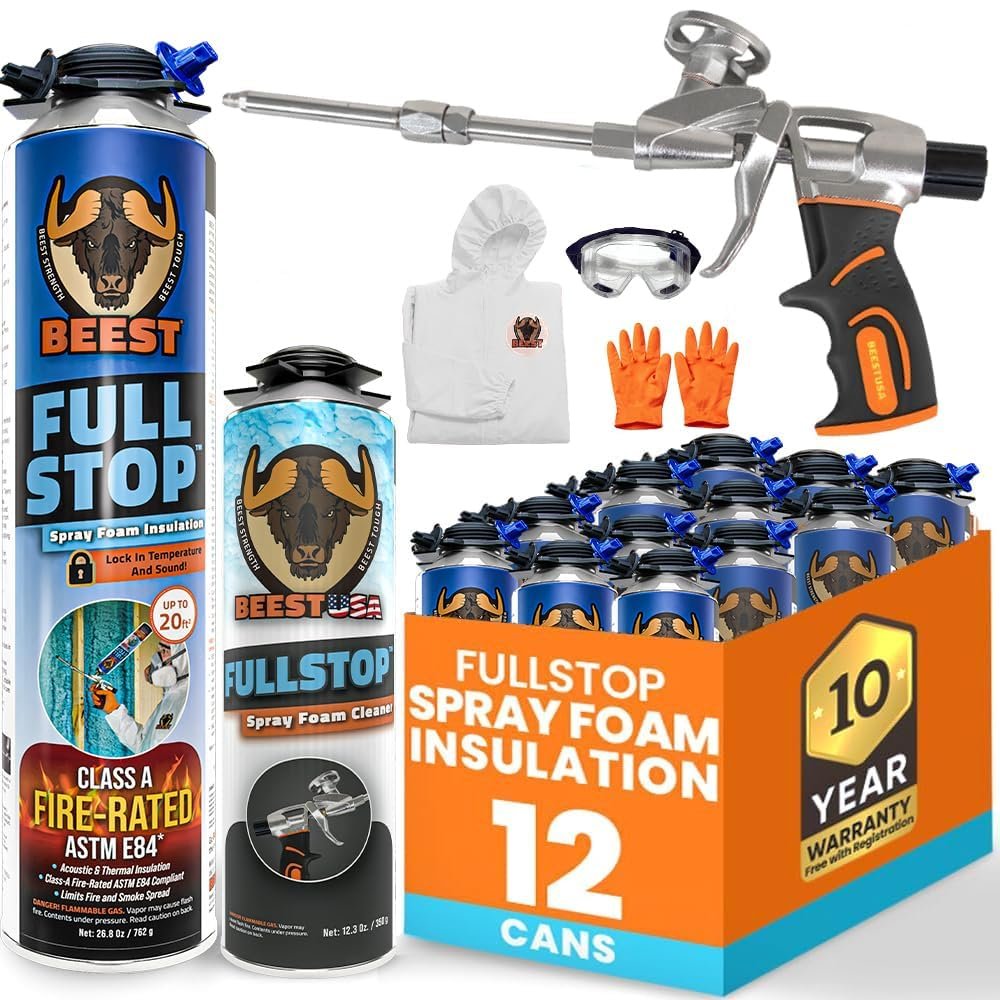
DIY closed-cell foam kit
BEEST FullStop Spray Foam Insulation Kit — 240 board ft
One of the better-reviewed options in a category where ratings are generally mixed. Comes as 12 cans with a pro gun, cleaner, and basic safety gear rather than a two-tank system, which makes it more forgiving for a first-time user — you're not committed to finishing in one continuous session the way you are with a tank kit. Fire-rated formulation. Works out to roughly $0.82 per board foot, which is competitive with professional application on a per-unit basis. Realistically covers a 20ft container's walls at moderate depth, or use it for targeted areas and thermal bridges.
~$198 · 4.3★ from 630+ reviews
View on Amazon →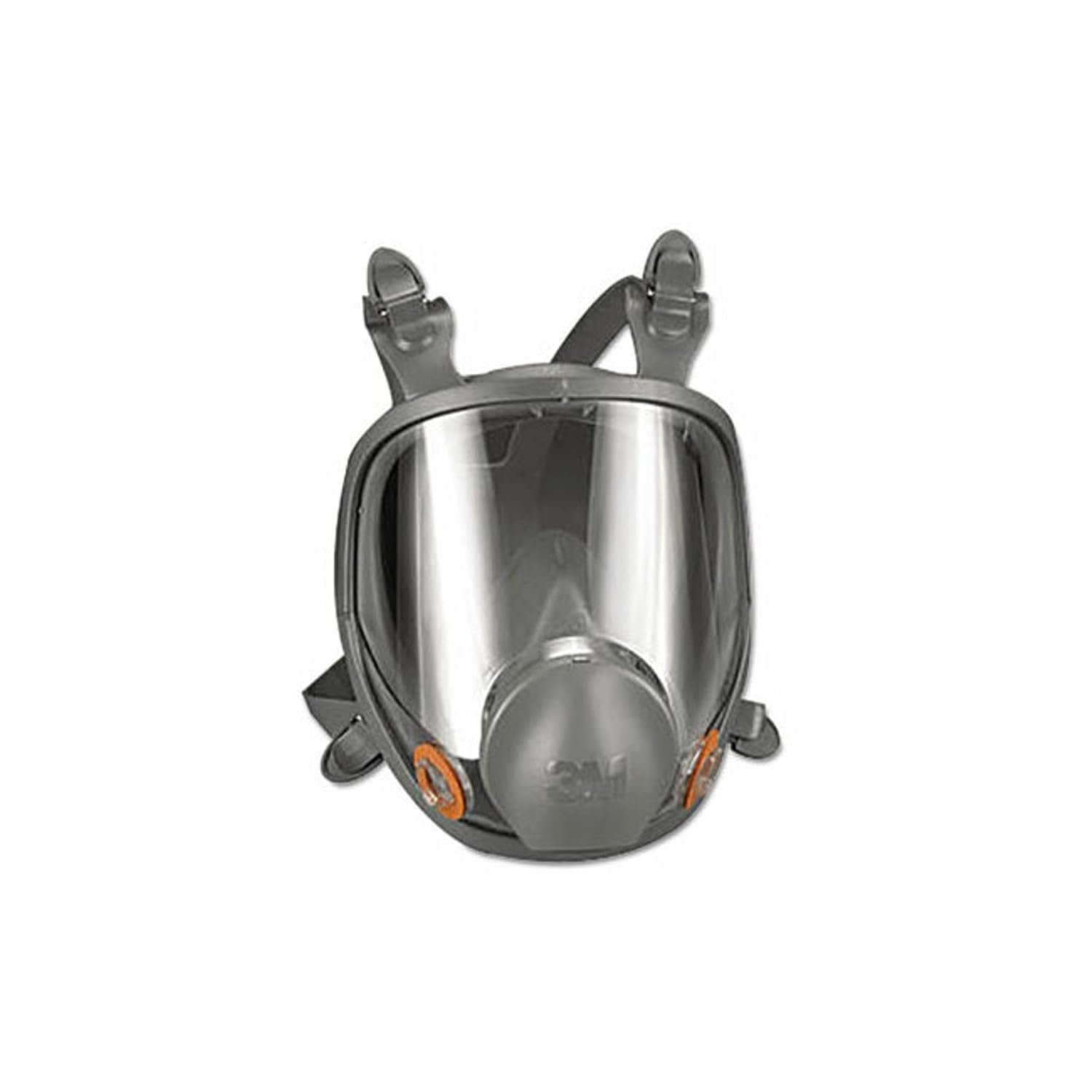
Required safety gear — do not skip
3M 6800 Full Facepiece Reusable Respirator
Full-face rather than half-mask, because uncured spray foam irritates eyes as well as airways. The face seal also protects against overspray, which is unpleasant to remove from skin and impossible to remove from eyes. Reusable across the whole build — you'll want it again for sanding, painting, and cutting. Pair with the cartridges below; the facepiece alone does nothing without them.
Sold separately from cartridges
View on Amazon →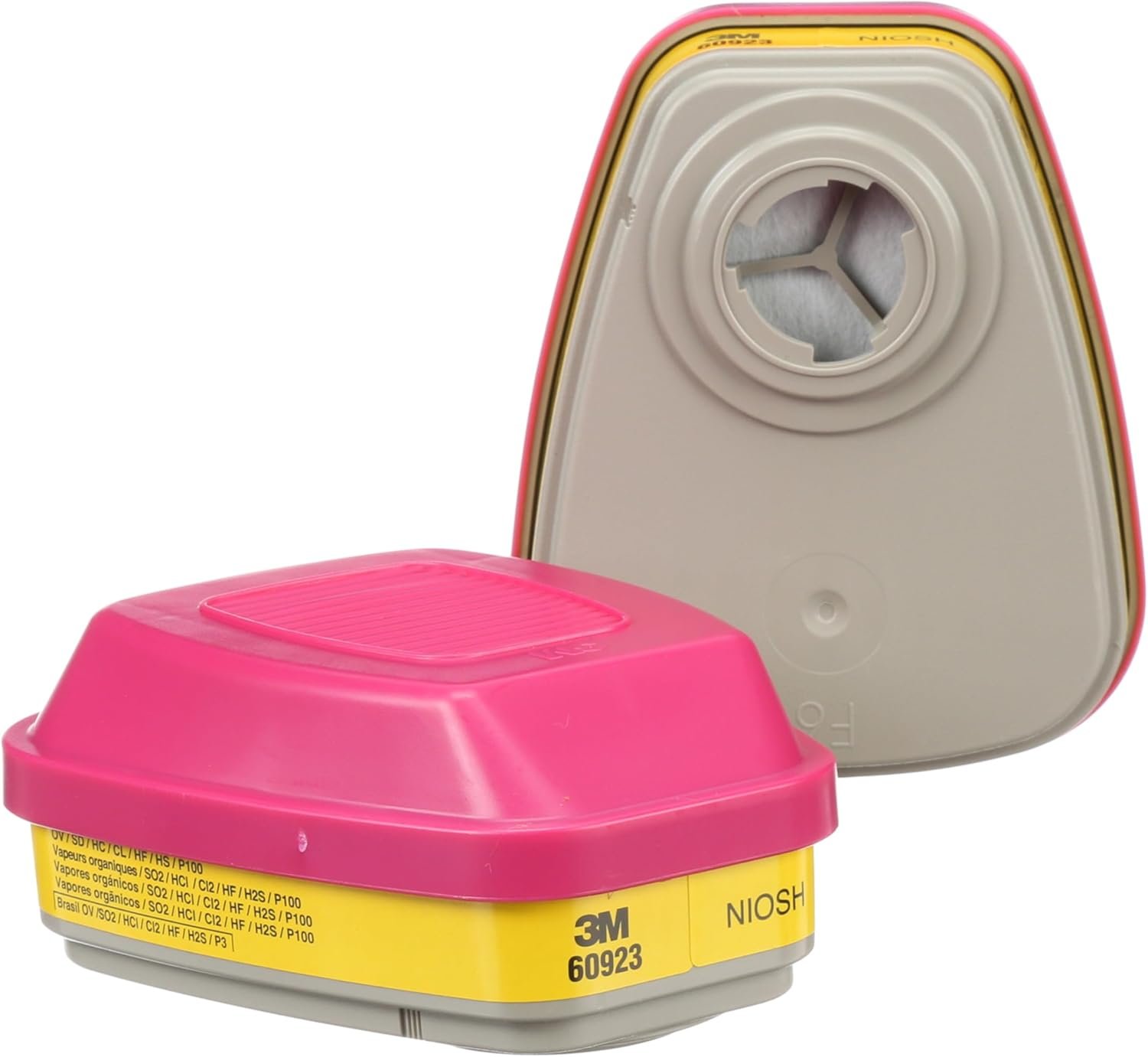
Required safety gear — the correct filter
3M 60923 Organic Vapor / Acid Gas / P100 Cartridges
This specific combination is the one that matters. Organic vapor and acid gas protection handles the isocyanate off-gassing; the P100 particulate filter handles overspray aerosol. A dust mask or a plain particulate filter does not protect you from spray foam chemistry. These fit the 6800 facepiece above and are also the right cartridge for painting and rust treatment work later in a build.
Pack of 2 cartridges
View on Amazon →Exterior insulation — the overlooked approach
Most guides focus on interior insulation, but insulating the outside of a shipping container is often the better option — especially for storage use or when preserving interior space matters.
Exterior insulation wraps the container in rigid foam board (typically 2–4" of XPS or polyiso) before applying cladding — metal siding, wood, or stucco. This approach has several advantages over interior installation:
- No interior space lost — the insulation doesn't eat into your usable floor area
- Better thermal performance — the steel's thermal mass stays on the warm (interior) side, reducing temperature swings
- No vapor barrier complexity — insulation on the exterior means the steel never reaches the dew point of interior air
- Easier installation — flat exterior surfaces are easier to insulate than the corrugated interior walls
The main downside is cost — you need cladding over the exterior insulation, which adds material and labor. It also changes the look of the container significantly, which matters if you're placing it on a property where appearance is a factor.
For container homes and offices, a common approach is a hybrid: spray foam on the interior for vapor control, plus exterior insulation under cladding for additional R-value in cold climates.
Materials that make a foam board install work
Foam board itself is best bought locally — it's bulky, shipping is expensive, and Home Depot or Lowe's will beat any online price on 4×8 sheets. What's worth ordering ahead is the two things people most often get wrong.
The detail most guides miss
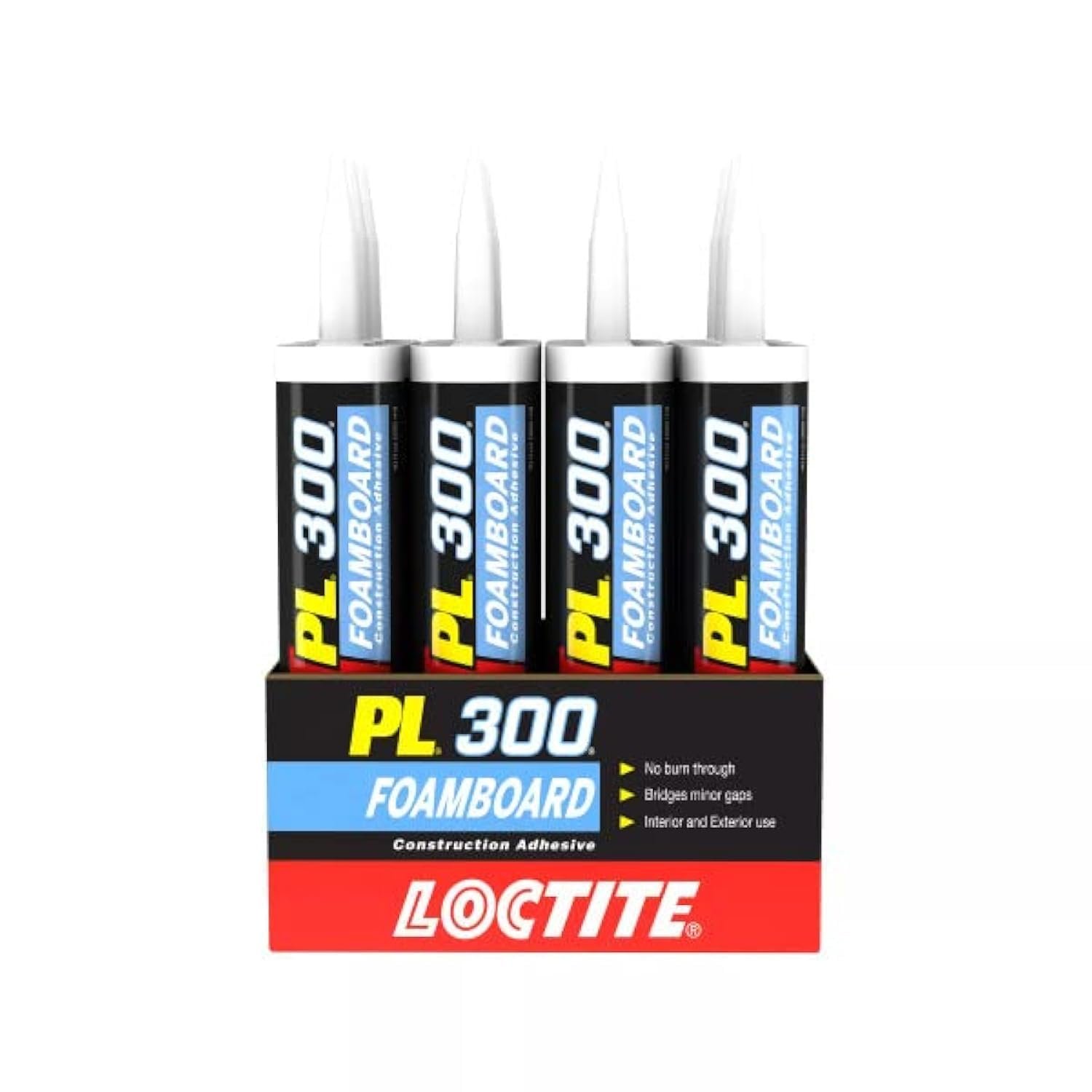
Loctite PL300 Foamboard Construction Adhesive
Standard solvent-based construction adhesive dissolves polystyrene foam board. It looks fine when you apply it and the bond fails weeks later, with the foam visibly eaten away at every contact point. PL300 is formulated to be foam-safe, and it's the correct product for bonding XPS, EPS, or polyiso to steel. On a corrugated container wall you're gluing to the raised ribs, so adhesive coverage is limited and the bond quality genuinely matters. Buy more than you think you need — a 40ft container takes a lot of tubes.
Sold by the tube — 10 oz cartridge
View on Amazon →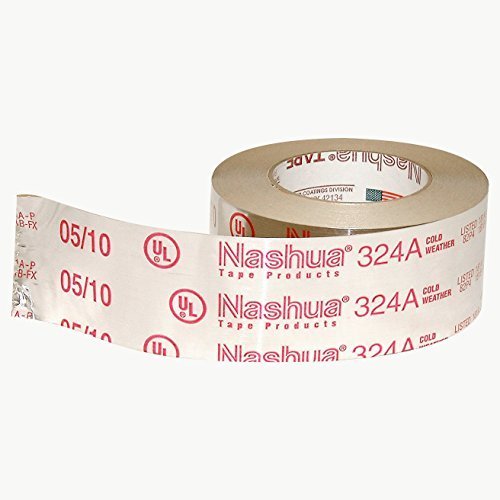
Seam sealing
Nashua 324A Cold Weather Premium Foil Tape
Every seam between foam boards is a potential air and vapor path, and unsealed seams undermine the whole assembly — you lose R-value at every joint and give moisture a route to the steel behind. Foil tape seals the seams and maintains the vapor barrier across the surface. The cold-weather formulation matters if you're working in an unheated container in winter, when standard tape adhesive won't grab. Also useful for sealing around penetrations and taping the vapor barrier itself.
Available in multiple widths and lengths
View on Amazon →Cheapest way to insulate a shipping container
If budget is the primary constraint, here are the three lowest-cost approaches in order:
#1 Cheapest
Exterior rigid foam board (DIY)
$800–$1,800 materials only
Apply 2" XPS board to exterior walls with construction adhesive. Tape seams with foil tape. Leave exposed (for storage) or add cheap metal siding over top. No framing required, no vapor barrier complexity. Works well for dry climates and non-habitable uses.
#2 Budget option
Interior rigid foam board (DIY)
$1,000–$2,200 materials + framing
Frame interior walls with metal furring strips (cheaper than studs), glue 2" XPS to the corrugated walls between furring, tape seams. More labor-intensive than exterior but keeps the weatherproof exterior intact. Better for permanently placed containers.
#3 DIY spray foam
Two-component foam kits
$400–$1,200 per kit (covers ~600 sq ft at 1")
DIY two-component spray foam kits (Touch 'n Seal, Foam It Green) can be used for small areas or thin flash coats, but covering an entire 20ft container to 2" requires 3–4 kits and significant skill. Better suited for gaps and spot application than full coverage.
Cheapest ≠ best for habitable spaces
The cheapest methods above are appropriate for storage containers or very dry climates. For a container you'll live, work, or sleep in — especially in a humid or cold climate — the condensation risk of improperly installed cheap insulation can cost far more to remediate than doing spray foam correctly the first time.
Radiant barrier — cheap, useful, and widely misunderstood
Reflective foil or bubble-foil products are the cheapest thing you can put on a container wall, and they're heavily marketed for exactly this use. They do work — but only against one of the three ways heat moves, so it's worth understanding what you're actually buying.
| What it does well | What it doesn't do |
|---|---|
| Reflects radiant heat — the dominant heat gain path when sun hits a steel roof and walls. In hot, sunny climates this measurably reduces interior temperature. | It's not a substitute for R-value. Foil products have low nominal R on their own, and the reflective effect only works with an adjacent air gap. Pressed flat against steel and covered with plywood, most of the benefit disappears. |
| Doubles as a vapor barrier — the foil facing is impermeable, which is genuinely useful in a container assembly. | Won't stop conductive heat loss in cold weather. A radiant barrier alone in a northern winter is not insulation. |
Where radiant barrier actually earns its place
Hot-climate storage containers where you just want the interior less brutal in summer and aren't heating it. Under the roof specifically, where solar gain is worst, with an air gap beneath. As a vapor barrier layer in a larger assembly, paired with foam board or spray foam that supplies the actual R-value. What it isn't is a standalone insulation solution for a habitable container in a cold climate — treat marketing that suggests otherwise with skepticism.
Budget option — radiant heat and vapor control
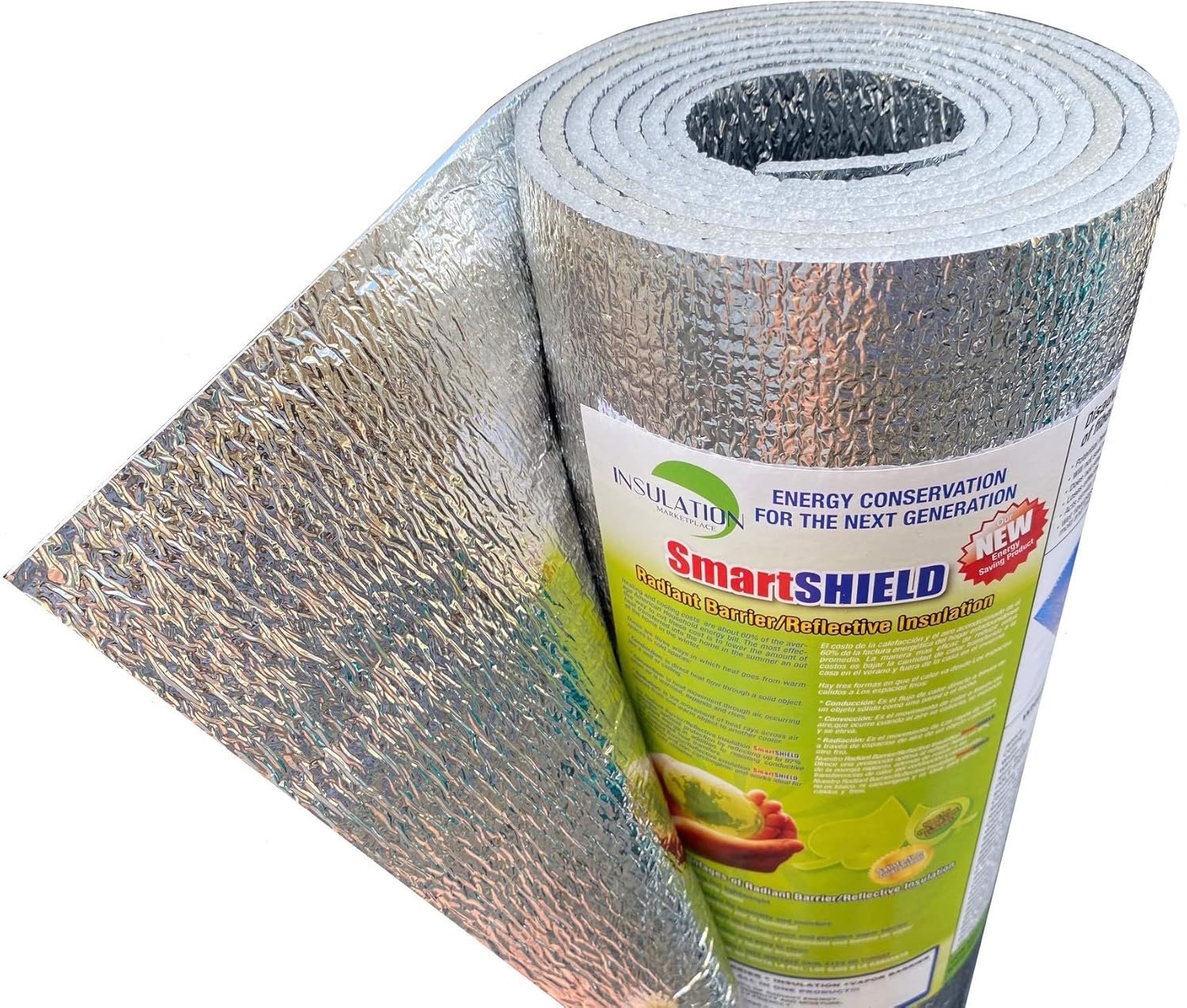
SmartSHIELD Radiant Barrier / Reflective Insulation
Double-sided foil over a closed-cell foam core, sold in rolls that are easy to cut and staple or tape into place. On a container the highest-value application is the roof, where solar gain is worst — leave an air gap beneath the foil for the reflective effect to work. Also serves as a vapor barrier layer over foam board. Cheap enough that using it as the roof layer on a storage container is an easy call; just don't rely on it alone for a space you plan to heat. Available in several thicknesses and roll widths.
Sold by the roll — multiple sizes
View on Amazon →Shipping container insulation kits
Several manufacturers sell insulation kits designed specifically for shipping containers. These are primarily marketed at the DIY market for storage containers and range from basic liner kits to more comprehensive solutions.
Spray foam kits (two-component)
$400–$800 per kit
Touch 'n Seal and Foam It Green are the most common brands. Each kit covers approximately 600 sq ft at 1" depth. A full 20ft container (walls + ceiling) needs 3–4 kits for 2" coverage. Application requires proper PPE — full-face respirator, gloves, protective suit. Best for gaps, penetrations, and supplemental coverage rather than full walls.
Rigid board + reflective liner combo
$600–$1,500 for a 20ft container
Some suppliers sell bundles of rigid foam board with reflective foil-faced barriers. The reflective layer helps in hot climates by reflecting radiant heat. Brands like Prodex and SuperFOIL make foil-bubble-foil products marketed for container use. These provide R-values of 3–10 depending on thickness and air gaps — useful as a supplement to rigid foam, not a standalone solution.
Container liner/insulation blankets
$200–$800 per container
Quilted insulation blankets that hang from the ceiling and walls of the container. Originally designed for cargo protection (temperature-sensitive goods in transit), these provide minimal R-value (typically R-3 to R-6) but are easy to install and remove. Best for storage containers where you want some temperature moderation without permanent modification.
Spray foam with professional kit + rented gun
$1,500–$3,000 all-in
Some foam suppliers sell larger contractor kits with a proportioning gun for rent. With proper training and PPE, experienced DIYers can achieve close-to-professional results on walls and ceiling. This path is only recommended for those with prior spray foam experience — technique significantly affects cell structure and performance.
R-value requirements by climate
The R-value you need depends on your climate zone and use case. Containers in mild climates need far less insulation than those in the Midwest or Mountain West. These targets align with IRC standards for residential construction.
Hot / mild (zones 1–3)
Target: R-13 walls, R-19 roof
Southern states, coastal California, Florida, Texas Gulf Coast. Focus is on blocking radiant heat and managing humidity rather than cold. Spray foam at 2" (R-12–14) handles both. Reflective roof coating adds meaningful benefit here.
Mixed / moderate (zones 4–5)
Target: R-20 walls, R-30 roof
Pacific Northwest, Mid-Atlantic, interior South. Needs both heating and cooling performance. Spray foam at 3" (R-18–21), or rigid foam board at R-20+ on walls. Pay close attention to roof insulation — heat loss there exceeds walls in winter.
Cold / very cold (zones 6–8)
Target: R-30 walls, R-49 roof
Mountain states, upper Midwest, northern tier. Heating is critical. Spray foam at 4–5" (R-24–35) plus additional roof insulation. Exterior insulation layer strongly recommended to protect the steel's thermal mass and add R-value without sacrificing interior space.
Full cost breakdown
Costs below are for a standard 20ft container (approximately 1,400 sq ft of wall, ceiling, and floor surface area). A 40ft container runs roughly 1.8× these figures.
| Method | Materials (DIY) | Labor (pro) | Total — DIY | Total — Pro |
|---|---|---|---|---|
| Closed-cell spray foam (2") | N/A — requires pro | $3,300–$6,000 | — | $3,300–$6,000 |
| Closed-cell spray foam (3") | N/A — requires pro | $4,000–$9,000 | — | $4,000–$9,000 |
| Rigid foam board — exterior | $800–$1,500 | $800–$2,000 | $800–$1,800 | $1,600–$3,500 |
| Rigid foam board — interior | $1,000–$2,000 | $1,000–$2,500 | $1,000–$2,200 | $2,000–$4,500 |
| Batt + stud wall + vapor barrier | $800–$1,500 | $800–$1,800 | $800–$1,500 | $1,600–$3,300 |
| DIY spray foam kits (2") | $1,200–$2,400 | — | $1,200–$2,400 | — |
| Insulation liner/blankets | $200–$800 | $0 | $200–$800 | — |
For a container home or office, budget $4,000–$9,000 for proper spray foam installation on a 20ft container. Trying to cut costs here with cheaper methods is a common source of expensive remediation work later.
For a storage container in a temperate climate, $800–$2,000 in DIY rigid foam board is usually sufficient.
Walls, floor, and roof — each surface covered
Most insulation guides focus on walls and skip the two surfaces that matter most for thermal performance: the roof and the floor.
Walls
Primary focus — most sq footage
Corrugated steel walls are the largest surface area and the main thermal bridge. Interior insulation must account for the corrugation — spray foam fills the ridges naturally; rigid board requires furring strips to bridge them. Exterior installation on flat outer surface is easier. Typical target: 2–4" of closed-cell foam, or equivalent R-value with rigid board.
Roof
Highest heat loss in winter / gain in summer
The roof takes direct solar radiation in summer and is the largest heat loss surface in winter. It needs at least as much insulation as the walls, and ideally more. Options: spray foam applied to the underside of the roof from inside; rigid foam board laid on top of the roof under a metal cover; or a white roof coating (for hot climates only) that reflects 70–90% of solar radiation before it enters.
Floor
Often skipped — shouldn't be
The hardwood container floor sits on steel cross-members (outriggers) that conduct directly to the ground. In cold climates, floor heat loss is significant and the floor feels cold underfoot. The standard approach: 2" of rigid XPS foam board installed between the steel outriggers before any finished flooring. For a complete thermal break, add a layer of foam board over the outriggers too before installing new flooring on top.
Two tools worth owning for a container build
Insulation is one of the few parts of a build where you can't see whether it's working. These two make the invisible visible — before you close the walls up and after.
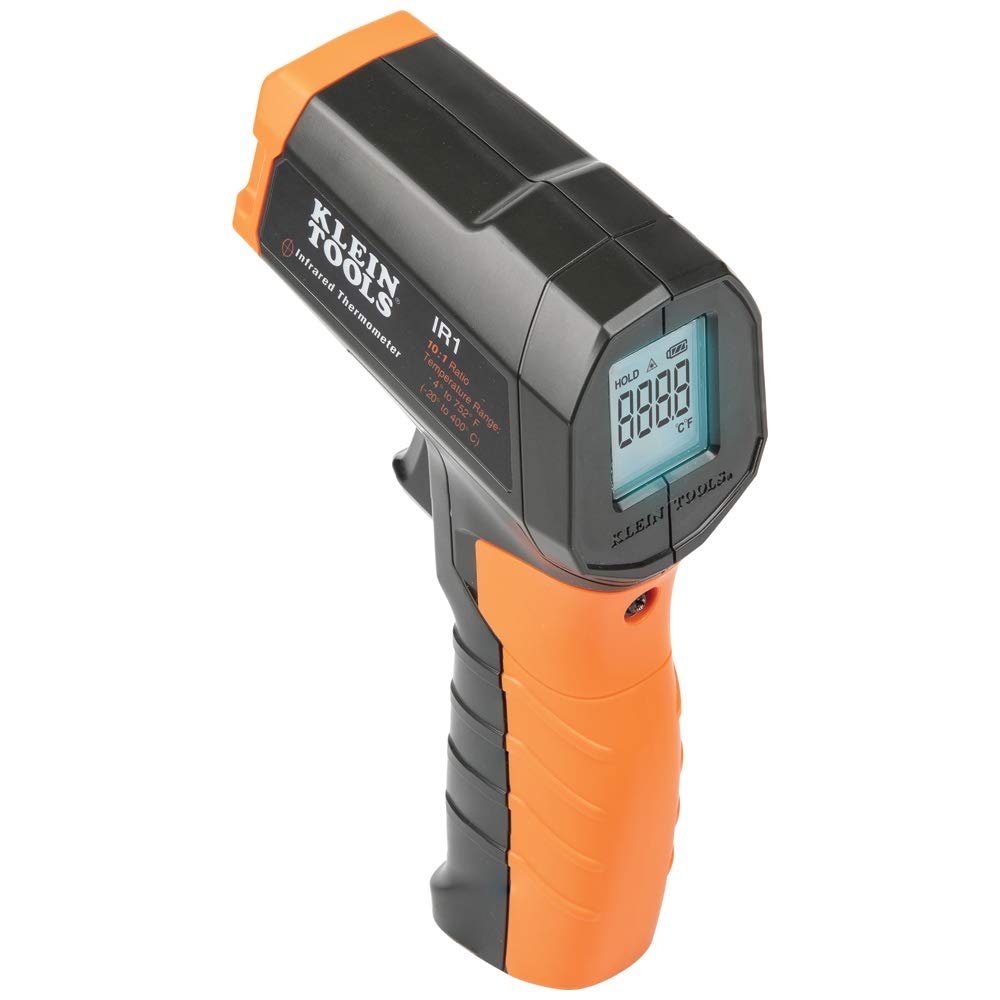
Find thermal bridges before you close the walls
Klein Tools IR1 Infrared Thermometer
Point it at a wall and read the surface temperature instantly. On a container this is genuinely diagnostic — steel framing, uninsulated corner posts, and gaps in the foam all show up as cold spots on a winter day or hot spots in summer. Scanning the interior before you install finish surfaces tells you exactly where the insulation is failing, while you can still fix it cheaply. Afterwards it's the fastest way to find why one end of the container is colder than the other. Also useful for checking HVAC output and confirming whether a surface is above the dew point.
Compact, pocket-sized, laser targeting
View on Amazon →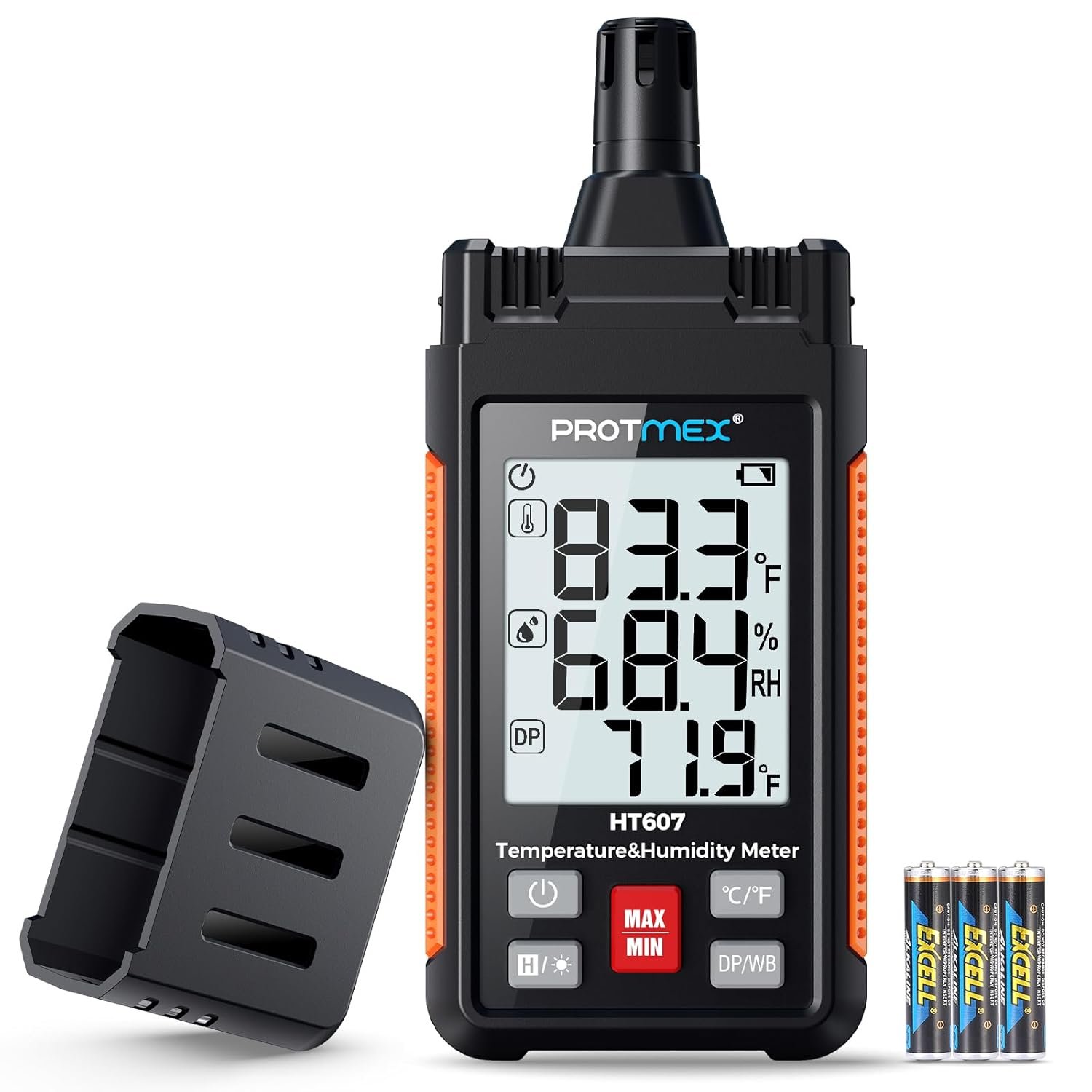
Monitor the condensation risk directly
HT607 Temperature & Humidity Meter
As covered in the condensation section above, the whole insulation problem in a steel box comes down to keeping warm humid interior air away from cold steel. A hygrometer tells you whether you're winning. Interior relative humidity above roughly 60% in cold weather means you have a condensation problem developing whether or not you can see it yet — and it's a signal to add ventilation or dehumidification before mold appears. Cheap insurance on a build where moisture damage is the main long-term risk. If it tells you humidity is running high, see active humidity control above.
Digital display, min/max tracking
View on Amazon →DIY vs professional installation
Spray foam requires a professional without exception for full-container work. The two-component system requires specialized equipment, proper PPE (off-gassing during application is hazardous), and trained technique to achieve correct cell structure and density. Improperly applied spray foam can trap moisture rather than prevent it. This is one trade where DIY is not a realistic option for walls and ceilings — though DIY kits for gap-filling and small spot applications are practical.
Rigid foam board is a solid DIY project for anyone comfortable with basic construction. Measure and cut with a utility knife and straightedge, apply with foam-compatible construction adhesive, and tape every seam with foil tape. The key is a continuous vapor barrier with no gaps — check every penetration carefully.
Batt insulation with a stud wall is the most DIY-accessible but also the most risk-prone. If you go this route: use mineral wool over fiberglass, install a continuous 6-mil poly vapor barrier directly against the steel (warm side), and tape every seam and penetration. Never skip the vapor barrier to save time — it's the entire point of the system.
Get container pricing before you plan your insulation budget
The insulation approach depends on how you're using the container, your climate, and what you paid for it. Shipped.com lets you compare new and used container prices from local suppliers — useful context before planning the full fit-out budget.