ContainerCompass earns a commission on qualifying Amazon purchases at no extra cost to you.
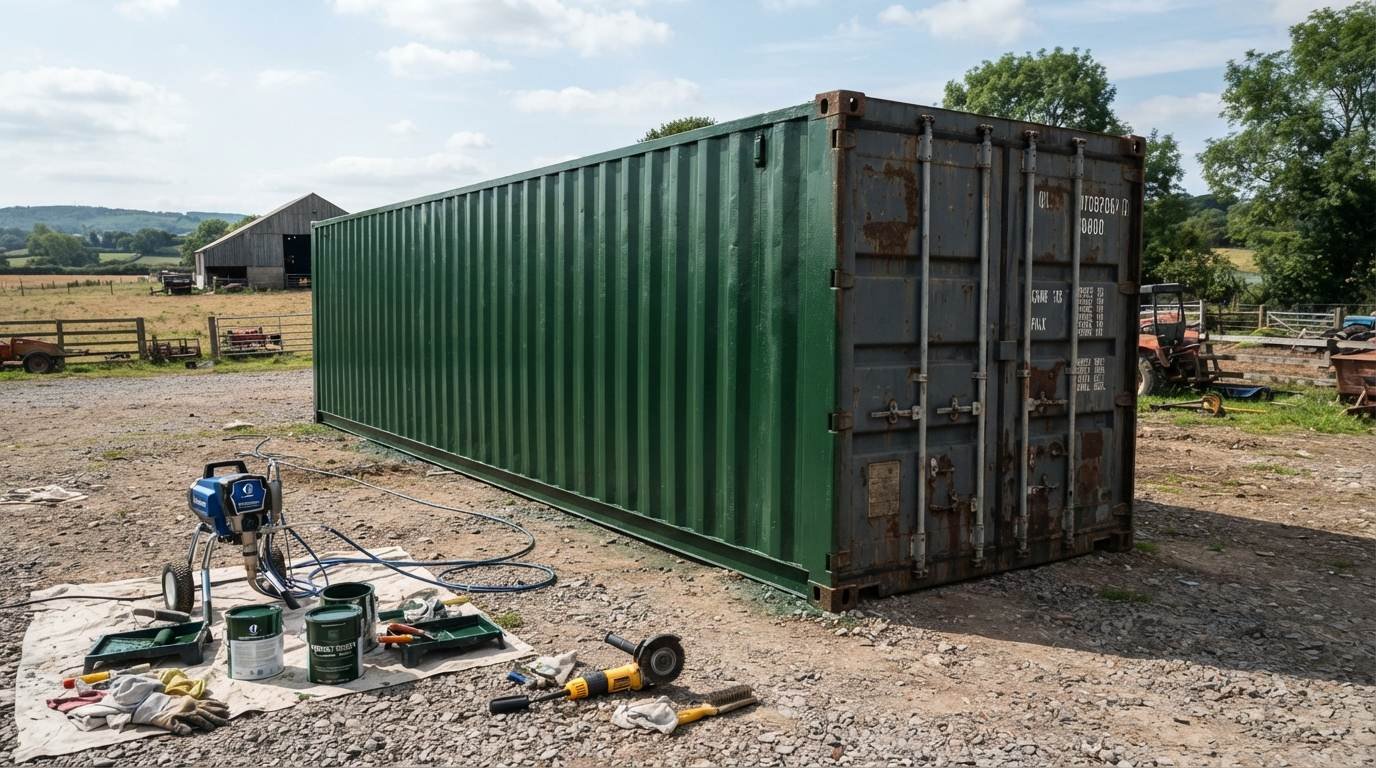
Used shipping containers arrive in one of two states: surface rust that looks worse than it is, or serious rust-through that compromises the structure. Knowing which you're dealing with — and treating it correctly — is the difference between a container that looks good for 20 years and one that continues corroding underneath a fresh coat of paint. This guide covers the full process from inspection to final topcoat.
Painting a container — quick reference
Paint type
DTM acrylic or epoxy
Gallons for 40ft exterior
2–3 gallons
Cost (DIY, 40ft container)
$200–$600
Cost (professional spray)
$1,500–$4,000
Rust converter needed?
Yes — for any rust
Primer needed?
Not always — DTM skips it
In this guide
The Three-Step Process
Painting a used shipping container correctly requires three distinct phases — assessment, preparation, and application. Skipping or rushing the preparation phase is the most common mistake, and it guarantees the paint will fail prematurely. A rust converter applied to a dirty surface won't bond. DTM paint applied over active rust will peel within a season. Take the time to prep correctly and the paint will last 5–10 years before needing a touch-up.
Assess the rust — surface rust vs rust-through
Not all rust is equal. Surface rust — the orange-brown patina that develops on Corten steel — is cosmetic. Corten (weathering steel) is specifically designed to form a stable rust layer that actually protects the base metal. Many container owners deliberately leave Corten patina unpainted for this reason. Rust-through is different — it's where the steel has corroded completely, leaving holes or areas where the panel can flex like a thin membrane. Tap suspicious areas with a coin or knuckle — a hollow sound indicates compromised steel beneath. Check with our free inspection checklist before you start any painting project.
Surface preparation — the step that determines everything
Surface preparation determines how long your paint job lasts more than any other factor. For a used container:
Wire brush or angle grinder with wire wheel — remove loose rust scale, flaking paint, and contamination from all surfaces to be painted. You don't need to get to bare metal — just remove everything that isn't firmly adhered. A knotted wire wheel on a 4.5" angle grinder is the most efficient tool for large areas.
Degrease — wipe down all surfaces with a degreaser or TSP substitute to remove oil, salt, and contamination. Any grease or salt left on the surface will prevent adhesion. This is especially important for containers that carried food, chemicals, or operated in coastal environments.
Rinse and dry — allow 24–48 hours of dry weather after degreasing before applying rust converter or paint.
Rust treatment — converter, not just paint over rust
Apply rust converter to all areas with active rust before any topcoat. Rust converter chemically reacts with iron oxide (rust) to form iron tannate — a stable, dark, paintable surface. It does not require sanding to bare metal first. Apply with a brush or roller to all rusty areas, allow to cure fully (typically 24 hours), and then apply your topcoat directly over it. Never paint over rust without treating it first — the rust will continue to grow beneath the paint film and cause premature bubbling and peeling.
Choosing the Right Paint for a Shipping Container
The right paint for a shipping container exterior is a direct-to-metal (DTM) coating — specifically formulated to bond to steel without a separate primer coat. Standard house paint will not adhere properly to steel and will fail quickly. There are three main options:
| Paint type | Adhesion to steel | Durability | Cost | Best for |
|---|---|---|---|---|
| DTM acrylic enamel | Excellent — bonds directly to steel and rust converter | Good — 5–10 year exterior life | $35–$60/gallon | Most container painting projects — DIY and professional |
| Alkyd enamel (oil-based DTM) | Excellent — penetrates surface oxidation well | Very good — hard finish, slower cure | $40–$70/gallon | High-wear areas; industrial use; very durable finish |
| Epoxy coating (2-part) | Superior — chemical bond to metal | Excellent — 10–20+ years | $80–$150/gallon | Long-term permanent installations; professional application |
| Standard latex/acrylic house paint | Poor — not formulated for metal | Poor — will peel within 1–2 seasons | $25–$50/gallon | Do not use on container exteriors |
| Elastomeric roof coating | Good — flexible; waterproof | Good — 5–10 years | $40–$80/gallon | Container roofs only — not side panels |
Do you need a primer?
Not always. True DTM coatings are formulated to adhere directly to steel without a separate primer coat — that's the point of the DTM designation. However, if you're painting over bare metal (fully stripped of rust and old paint), a self-etching primer before the DTM topcoat improves adhesion and adds corrosion resistance. If you've applied rust converter, the converted surface acts as a primer layer — apply the DTM topcoat directly over it once fully cured.
Step 4 — Application Methods
| Method | Best for | Coverage rate | Cost | Notes |
|---|---|---|---|---|
| Roller (9" nap) | Large flat panels; DIY | 200–300 sq ft/gallon | Minimal tool cost | Use 3/8"–1/2" nap roller for corrugated surfaces; back-brush into troughs |
| Brush | Edges, corners, rust converter application | Slow — detail work only | Minimal tool cost | Use for cutting in edges and working paint into corrugation troughs after rolling |
| Airless sprayer | Full exterior, professional finish | Fastest — one person can do a 40ft in a day | $300–$800 sprayer or rental | Requires masking all openings; overspray management; best for large projects |
| Professional spray crew | Premium finish; large projects | N/A | $1,500–$4,000 for 40ft | Best result; factory-quality finish possible; requires less prep by owner |
Container Paint Colours
Colour choice affects more than aesthetics — darker colours absorb significantly more heat than lighter ones. A black or dark grey container in direct sun can reach 160°F+ surface temperature. For any habitable container, a lighter exterior colour meaningfully reduces the insulation load and interior temperature.
Cost Breakdown — Painting a 40ft Container
| Item | DIY cost | Professional cost | Notes |
|---|---|---|---|
| Wire brush / angle grinder prep | $0–$50 (tool rental or owned) | Included in labour | Knotted wire wheel on 4.5" grinder; most effective tool |
| Degreaser | $15–$30 | Included | TSP substitute or commercial degreaser; 1 gallon covers a 40ft container |
| Rust converter (Rust-Oleum Reformer) | $30–$60 (3–6 cans) | $50–$100 | Apply to all rusty areas before topcoat; one 10oz can covers ~10 sq ft of rust |
| DTM topcoat paint | $70–$180 (2–3 gallons) | Included | Budget 2 gallons minimum for one coat on a 40ft; 3 gallons for two coats |
| Roller, brushes, tray | $20–$40 | Included | 9" roller frame + 3/8" nap sleeve; 2" brush for edges |
| Labour (professional spray crew) | Your time (~1–2 days) | $1,200–$3,500 | Professional airless spray delivers faster, more even coverage |
| Total | $135–$360 DIY | $1,500–$4,000 professional | DIY is achievable for most handy owner-builders |
Recommended Products

Step 1 — Rust converter
Rust-Oleum Rust Reformer Spray (10.25 oz)
Converts existing rust into a hard, stable, paintable surface without sanding to bare metal. Apply directly to wire-brushed rust spots. Chemically reacts with iron oxide to form iron tannate — a dark, stable layer DTM paint bonds to. One can covers approximately 10 sq ft; budget 4–6 cans for a full 40ft exterior with moderate rust. 4.7★ from 11,000+ reviews.
~$9–$12 per can
View on Amazon →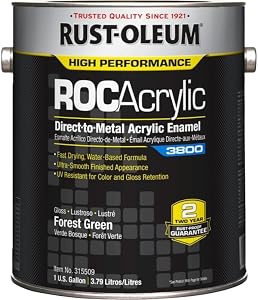
Step 2 — DTM topcoat
Rust-Oleum Professional DTM Acrylic Enamel (1 gallon)
Professional-grade direct-to-metal coating — bonds to steel without a separate primer. Strong corrosion resistance; dries to a semi-gloss finish that sheds water effectively. The standard choice for container barn and agricultural builds. Budget 2–3 gallons for a full 40ft container exterior. Available in multiple colours — check the listing for current colour options.
~$50–$70 per gallon
View on Amazon →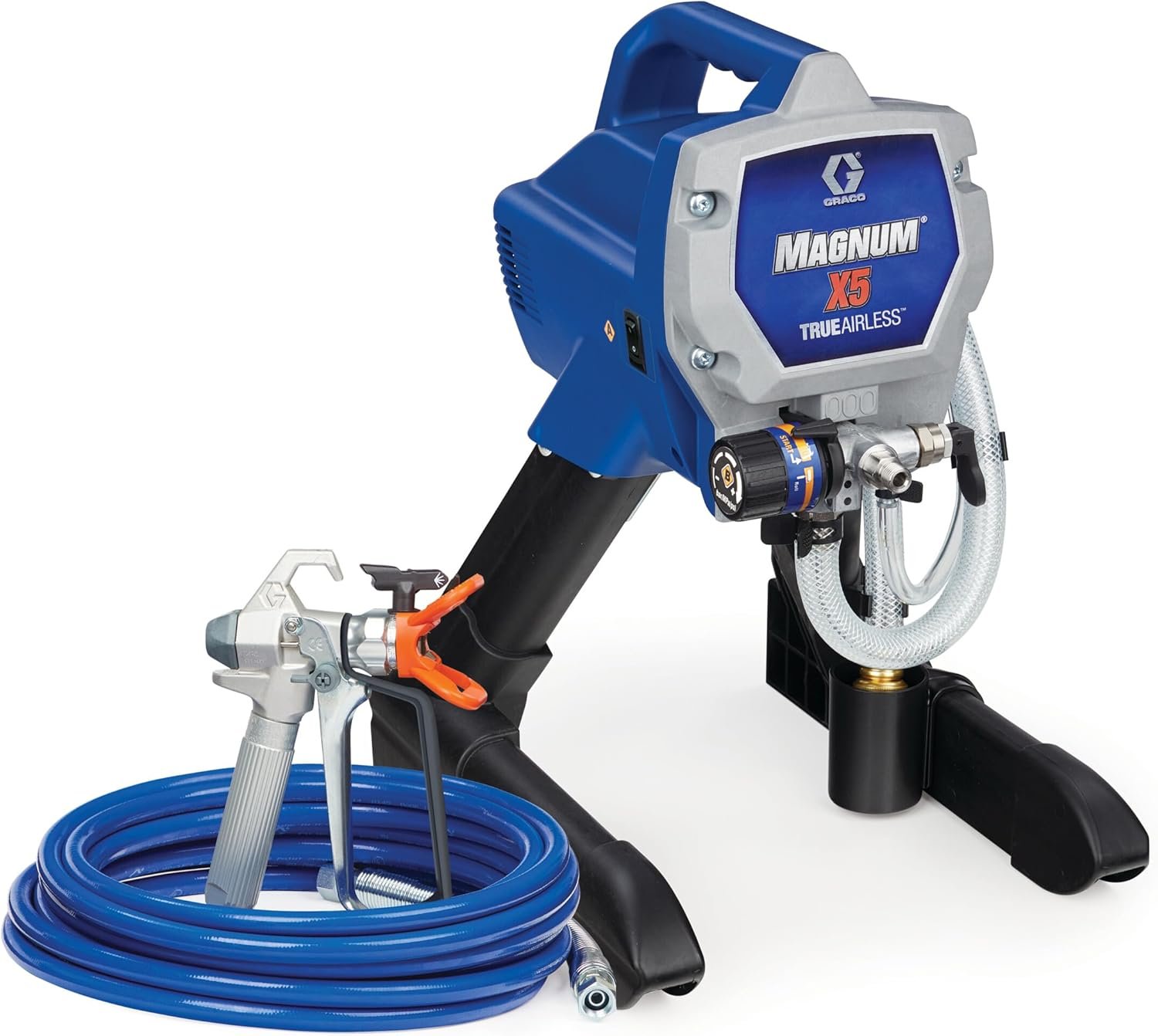
Application — airless sprayer
Graco Magnum X5 Airless Paint Sprayer
Entry-level airless sprayer suitable for painting a full container exterior. Handles unthinned paint directly from the can; adjustable pressure for DTM coatings. One person can paint a 40ft container in 3–4 hours vs a full day with roller and brush. Requires masking all openings and managing overspray. Worth the investment if you're painting multiple containers. Also widely available at tool rental stores.
~$300–$380
View on Amazon →Inspect before you paint
Painting over serious structural rust is money wasted. Use our free 34-point inspection checklist to assess your container before you start any painting project.